Call Us -
Cart
0
A product that looks right on the shelf can still feel wrong once you leave home. Bulk under clothing, noisy materials, a poor fit, or frequent changes can make managing bladder leaks more stressful than it needs to be. If you are asking which incontinence products are most discreet, the best choice usually comes down to matching the product's absorbency and shape to the type of leakage you experience.
Discreet protection is not simply the thinnest option. It is protection that stays in place, controls odor, fits comfortably under your usual clothes, and gives you enough absorbency to get through the activity ahead. For some people, that is a slim liner. For others, a well-fitting protective underwear product is actually less noticeable because it prevents leaks and shifting.
Which incontinence products are most discreet for daily life?
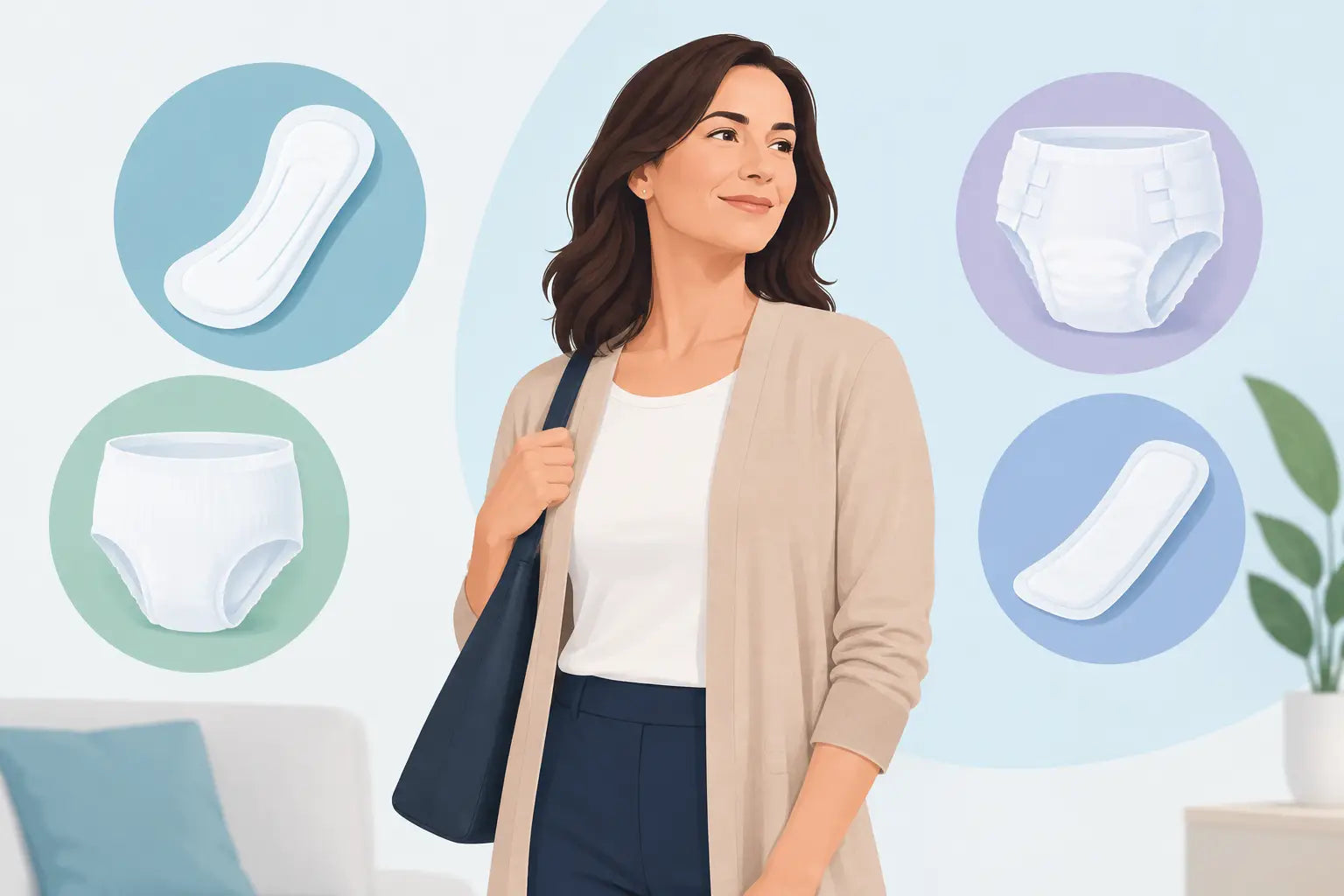
For light bladder leakage, bladder control pads and liners are usually the most discreet options. They are designed to fit inside regular underwear, have a low profile, and can be changed quickly when needed. Many are shaped to follow the body's contours, helping them remain less visible under jeans, workwear, leggings, or casual clothing.
For moderate leakage, absorbent underwear or guards may offer better confidence without adding substantial bulk. Modern protective underwear is often made with soft, cloth-like materials and a trim profile. When the size and absorbency are right, it can look and feel similar to standard underwear under most everyday clothing.
For heavy or continuous incontinence, tab-style briefs may be the most practical choice, particularly for people with limited mobility, caregivers assisting with changes, or overnight needs. They are not always the lowest-profile option, but the right brief can be more discreet than using a product that is too light and leaks. Reliable protection prevents the visible clothing changes, odor concerns, and interruptions that people are trying to avoid.
Start with the type of leakage
Choosing by absorbency level alone can lead to an uncomfortable fit. The pattern of leakage matters just as much.
A small liner can work well for occasional drops of urine when coughing, laughing, lifting, or exercising. These episodes are often associated with stress incontinence. A pad or liner with a secure adhesive strip is usually enough for light, predictable leakage.
Urgency-related leakage can be less predictable and may involve a larger release of urine before reaching the restroom. In that case, a longer pad, a higher-absorbency guard, or protective underwear may provide better coverage. A product that performs well for a few drops may not be enough for a sudden urge episode.
People managing overflow leakage, limited mobility, or nighttime incontinence often need more absorbency and broader coverage. A pull-on product may be convenient for someone who can use the restroom independently, while a tab-style brief makes changes easier when a caregiver is involved. There is no advantage in choosing the thinnest product if it does not meet the actual need.
The most discreet product types, compared
Bladder control liners and pads
Liners and pads are often the first choice for light to moderate urinary leakage. They are discreet, simple to carry, and designed to be worn inside regular underwear. A narrow or regular-length liner works for very light leakage, while longer pads provide more front-to-back coverage and can handle more frequent episodes.
Choose products specifically made for bladder leakage rather than menstrual pads. Incontinence pads are designed to draw urine away from the skin and manage odor differently. This can improve comfort during a busy day and reduce the need for frequent clothing changes.
The trade-off is capacity. A thin liner may be ideal for a short errand or a light workday, but it may not provide enough protection for travel, exercise, or a long appointment. Keep a few spares in a small pouch so you can change when convenient.
Male guards
Male guards are contoured to fit the male anatomy and are typically worn in close-fitting underwear. They can be a very discreet solution for men with light to moderate dribbling or occasional bladder leakage. Their shape helps direct fluid into the absorbent core while minimizing bulk where it is not needed.
Fit matters here. Supportive briefs or boxer briefs generally hold a guard more securely than loose boxers. If the guard shifts, folds, or feels visible, changing the underwear style can make as much difference as changing the product itself.
Protective underwear
Disposable protective underwear, sometimes called pull-on underwear, is a strong option for moderate to heavier leakage. It pulls on like regular underwear and is usually less noticeable than an adhesive pad that has reached its limit or moved out of position.
Look for a close but comfortable waist and leg fit. Gaps around the legs can allow leaks, while an overly tight size can create lines under clothing and feel restrictive. Protective underwear is available in different absorbency levels, so a daytime option may be slimmer than the product you choose for overnight use.
This category is especially useful for people who want independence when changing products. It can also be a practical choice for outings, long car rides, and periods when restroom access is uncertain.
Tab-style briefs
Briefs with adjustable tabs provide high absorbency, adjustable sizing, and easier changes for caregivers. They are often used for heavy incontinence, reduced mobility, or overnight protection. While they are generally more substantial than liners or pull-on underwear, many current options use soft materials and adjustable closures that help create a secure fit.
For discretion, avoid sizing up just to gain absorbency. An oversized brief can sag, rustle, and show through clothing. Select the right waist range and consider a booster pad only if it is compatible with the brief and your care routine. A properly fitted brief under looser pants or sleepwear can be a dependable, discreet solution when stronger protection is necessary.
Features that make protection less noticeable
Absorbency is only one part of discretion. The following product features can improve comfort and confidence:
- A contoured shape helps the product fit the body instead of bunching under clothing.
- Odor-control materials help manage odor by neutralizing it, not simply covering it with fragrance.
- A fast-absorbing core pulls moisture away from the skin, reducing the wet feeling that can make a product uncomfortable.
- Breathable, cloth-like outer materials can feel softer and may be quieter than plastic-backed designs.
- Leak guards and secure leg openings are especially helpful for moderate to heavy leakage or when sitting for long periods.
Fit and clothing make a real difference
Even a thin product can become noticeable if it is worn with the wrong underwear or clothing. Snug, breathable underwear helps pads and guards stay flat. For pull-on protective underwear, choose the size based on the manufacturer's waist and hip measurements rather than guessing from regular clothing size.
Darker colors, prints, layered tops, and relaxed-fit pants can offer extra peace of mind, but you should not have to rebuild your wardrobe around bladder protection. Many people wear pads, guards, or protective underwear comfortably with standard work clothes, denim, activewear, and pajamas. The goal is a product that lets you dress for your life, not one that limits it.
Plan changes based on your day. A short trip may only require a spare liner, while a full day away from home may call for additional pads, wipes, and a discreet disposal bag. If you are traveling, pack more than you expect to use so you are not forced to settle for an unfamiliar product.
When to choose more protection
Trying to stay discreet can sometimes lead people to use a product with too little absorbency. If you are changing clothes, noticing dampness, or worrying about leakage every time you stand up, move to the next absorbency level or select a product with more coverage. A slightly more protective option that stays dry and secure is usually the more discreet one in real life.
Talk with a clinician if incontinence begins suddenly, comes with pain or burning, blood in the urine, fever, new weakness, or major changes in bowel habits. These symptoms may need medical attention rather than a product change alone. A healthcare professional can also help identify treatments, exercises, medications, or care strategies that may reduce leakage.
The right incontinence product should support your routine without demanding all of your attention. Start with protection that matches your leakage level, check the fit at home, and keep a dependable supply on hand. US MedResources makes it easier to find practical continence solutions delivered directly to your door, so you can focus less on managing supplies and more on moving through the day with confidence.