Call Us -
Cart
0
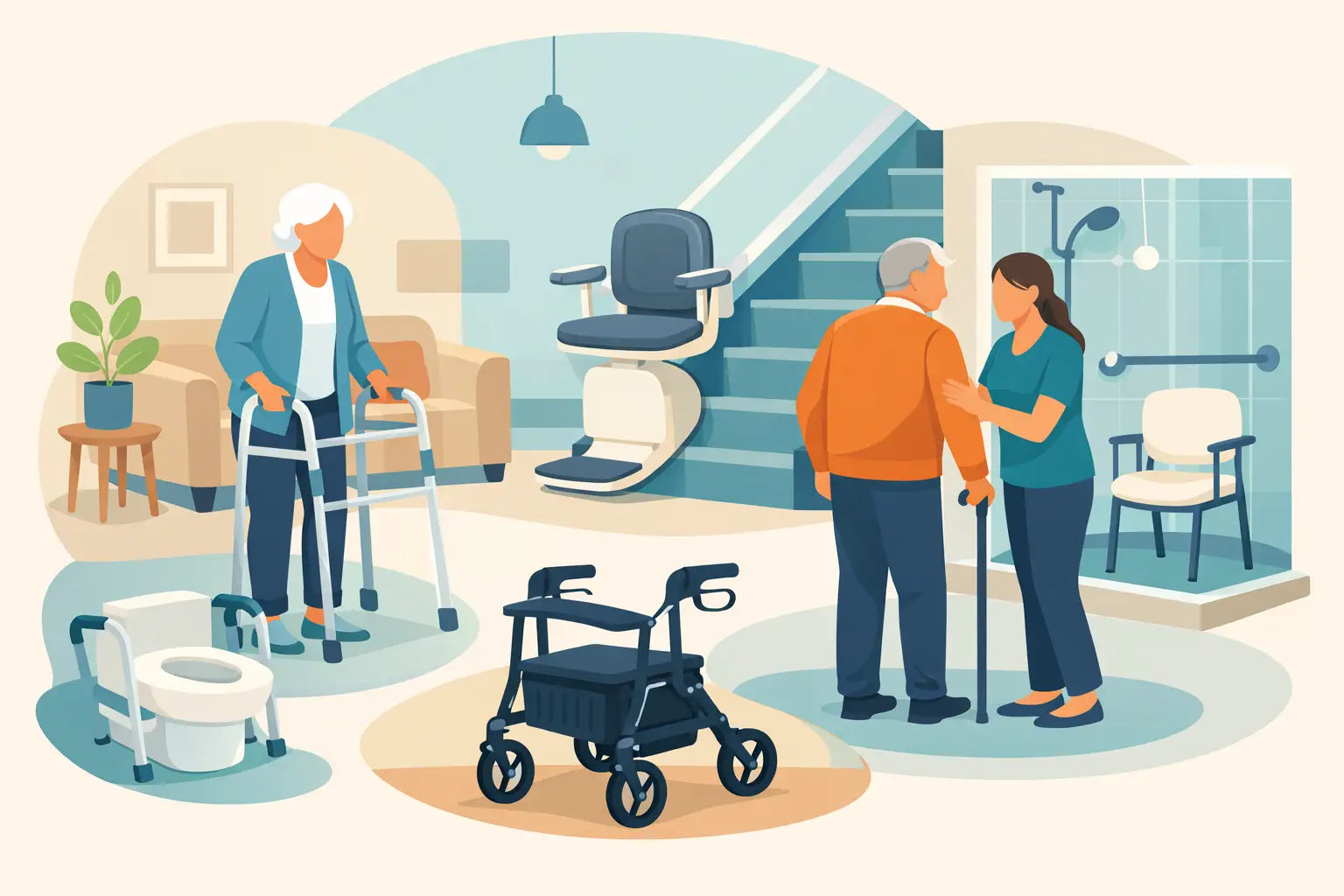
A hallway that felt easy a year ago can start to feel longer after a fall, a hospital stay, or even a gradual loss of strength. That is usually when families begin looking at home mobility aids for seniors - not as a luxury, but as a practical way to make everyday movement safer and less stressful.
The right aid can reduce strain, support confidence, and help an older adult stay active at home longer. The wrong one can create frustration, clutter, or even new safety risks. That is why it helps to look at mobility support by room, routine, and level of need rather than buying the first product that seems helpful.
How home mobility aids for seniors support daily life
Mobility changes rarely affect just one task. A person may still walk from the bedroom to the kitchen, but struggle getting up from a low chair, stepping into the shower, or turning safely in a narrow bathroom. Good support addresses those details.
Home mobility aids for seniors are designed to make movement more stable and more predictable. That can mean reducing the chance of slips, helping with transfers, or conserving energy during daily routines. For caregivers, the benefit is often just as significant. Proper equipment can make assistance safer and reduce the physical strain of lifting or guiding someone through a tight space.
There is also an independence factor that matters. Many seniors want help only where they need it, not a complete change in how they live. A cane, walker, grab bar, or bedside support can often preserve that balance better than family members stepping in for every task.
Start with the problem, not the product
It is tempting to shop by category alone, but the better approach is to ask where movement breaks down. Is the issue balance while walking, difficulty standing, fatigue, unsafe bathroom transfers, or trouble getting in and out of bed? The answer will usually point to the right type of equipment.
A senior with mild balance issues may do well with a cane or a simple support rail. Someone recovering from surgery may need a walker, raised toilet seat, and shower chair for a limited period. A person with progressive weakness may need layered support across several rooms.
This is where a practical home setup matters. One device rarely solves everything. Safe mobility at home is usually built from a few well-matched aids that support the same goal.
Walking support inside the home
For many households, walking aids are the starting point. A cane can help with mild instability, especially for short indoor distances. It is compact and easy to use, but it is not enough for someone who needs significant weight-bearing support.
Walkers offer more stability and are often a better fit after surgery, during rehab, or when balance is more unpredictable. A standard walker can provide strong support, though it requires lifting with each step. A wheeled walker or rollator may be easier for someone who can walk steadily but tires quickly. The trade-off is that wheeled models require good hand control and safe braking habits.
Indoor use matters here. Some products work well in open areas but become awkward around rugs, door thresholds, and tight corners. Before choosing, it helps to think about the actual floor plan of the home. A larger rollator may feel smooth in a clinic hallway and frustrating in a small bathroom.
Cane, walker, or rollator?
The best choice depends on strength, balance, and how the aid will be used day to day. A cane supports one side of the body and is often suited to mild weakness or occasional unsteadiness. A walker gives broader support and is usually the better option when fall risk is higher. A rollator adds mobility and convenience, but it is not ideal for every user, especially if someone tends to lean heavily or move too quickly.
When in doubt, it is better to choose stability over speed.
Bathroom mobility aids make a big difference
Bathrooms combine hard surfaces, moisture, and tight spaces, which makes them one of the highest-risk areas in the home. This is often where simple equipment has the biggest impact.
Grab bars near the toilet and in the shower can provide steady hand support during transfers. A raised toilet seat can reduce the effort required to sit and stand. Shower chairs and bath benches allow a person to wash while seated, which helps conserve energy and lowers the chance of slipping.
Handheld shower accessories can also improve safety by reducing awkward turning and reaching. Not every senior needs every product, but even one or two adjustments can turn a risky routine into a manageable one.
Why fit matters in the bathroom
Bathroom aids need to match both the user and the space. A bench that is too wide for the tub opening or a seat height that feels unstable will not be helpful for long. Weight capacity, surface grip, height adjustment, and ease of cleaning all matter. Families often focus on installation first, but daily usability is what determines whether the product gets used consistently.
Bedroom and transfer support
The start and end of the day can be surprisingly difficult. Getting out of bed, standing from a recliner, or repositioning safely can require more strength than many people realize.
Bed rails, bedside support handles, and transfer aids can make these moments safer without making the room feel clinical. For some users, a simple support handle next to the bed is enough. Others may need a more substantial transfer solution if weakness or post-surgical limitations are involved.
Chair assists and lift support products can also help reduce the strain of standing. This is especially useful for seniors with arthritis, knee pain, hip weakness, or general deconditioning. The main goal is not just comfort. It is reducing the unsafe momentum and pulling that often leads to falls.
Small home changes that support mobility aids
Equipment works best when the surrounding space supports it. Even high-quality mobility products can underperform in a cluttered or poorly arranged home.
Clear walking paths matter. Loose rugs, power cords, narrow furniture spacing, and poor lighting can all interfere with safe movement. In many cases, improving the environment is just as important as choosing the aid itself. A walker is far more effective when there is enough room to turn it properly. A grab bar helps more when the floor surface is dry and stable.
Caregivers should also think about reach. If a senior must bend, twist, or stretch to access common items, the home is still working against them. Mobility support is not only about movement from place to place. It is also about making routine tasks less physically demanding.
Choosing home mobility aids for seniors by level of need
A useful way to shop is to think in three levels. Mild support usually includes canes, basic rails, and small bathroom safety items. Moderate support may include walkers, shower seating, raised toilet aids, and bedside assist products. Higher support needs may call for transfer equipment, more structured seating support, and a full-room safety review.
Needs can also change fast. A product selected for short-term recovery may not suit long-term mobility loss. That does not mean buying the most advanced equipment right away. It means choosing products that match the current condition while leaving room to adjust if mobility changes.
This is where dependable product selection and straightforward ordering matter. Families and care providers often need practical solutions without delays, especially after discharge or during a decline in function. US MedResources supports that need with a broad range of home medical equipment delivered directly to the door.
What to look for before you buy
A mobility aid should feel secure, fit the user’s height and weight requirements, and make daily tasks easier rather than more complicated. Easy assembly, simple cleaning, and compatibility with the home layout are all worth checking before purchase.
It also helps to consider who will be using the product most. Some seniors want minimal, low-profile support that blends into the home. Others care more about comfort features like padded handles, storage baskets, or seats. Caregivers may prioritize transfer safety and ease of assistance. None of those priorities are wrong. The best product is the one that gets used correctly and consistently.
Price matters too, but the lowest-cost option is not always the best value. A poorly fitted cane or unstable bath seat can lead to a second purchase or a preventable injury. In home care, reliability is part of affordability.
The most helpful mobility aids do not take over a person’s life. They make ordinary things possible again - getting to the bathroom at night, standing up with less effort, moving through the kitchen with more confidence, or bathing without fear. When a product supports those moments well, it does more than improve safety. It helps a senior stay connected to daily routines, and that can make home feel like home for longer.