Call Us -
Cart
0
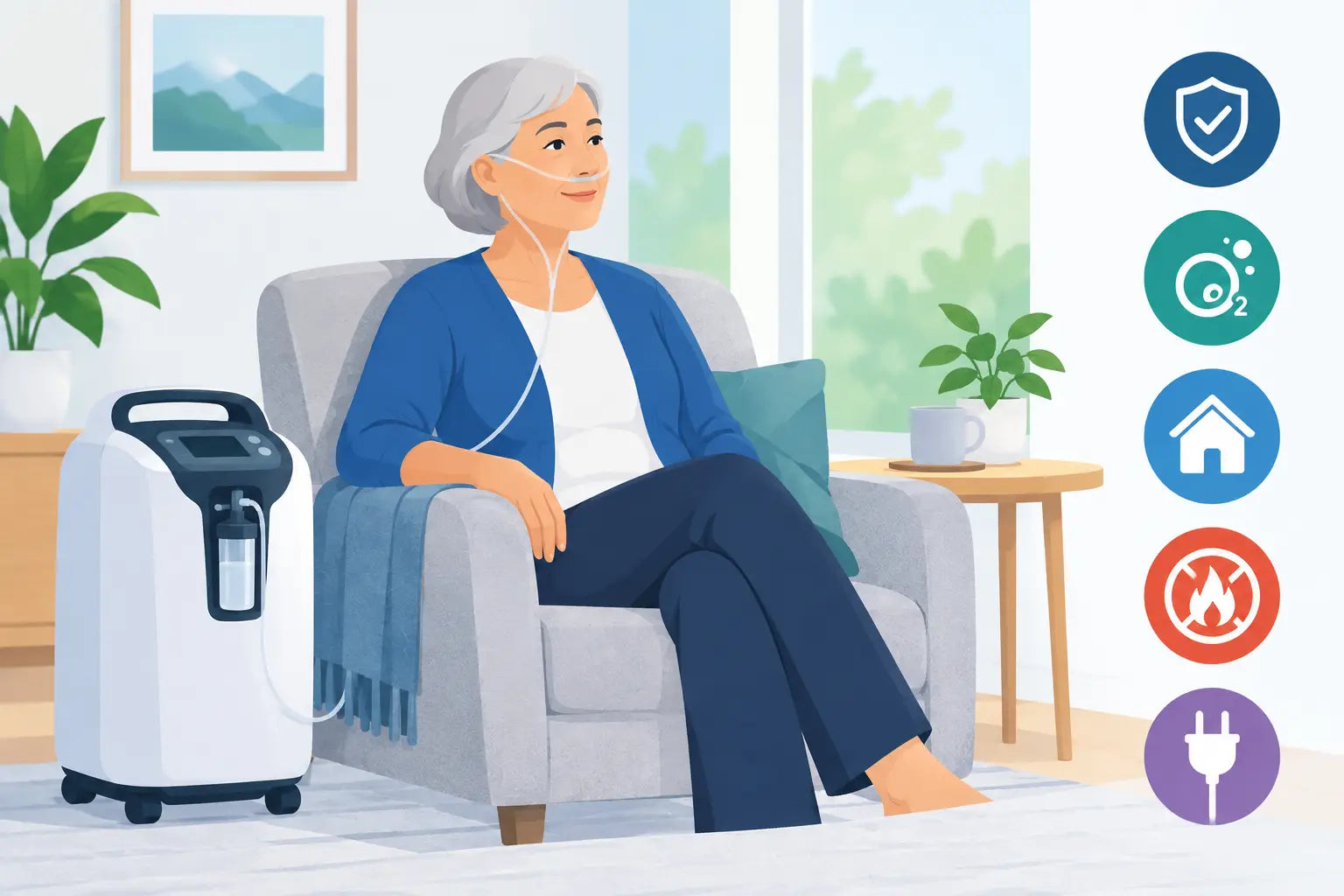
Oxygen therapy can make daily life more comfortable for people with COPD, pulmonary fibrosis, sleep-related breathing needs, and other respiratory conditions. It also changes the safety rules inside the home. This home oxygen safety guide gives patients, caregivers, and healthcare teams practical steps for using oxygen equipment safely without making the routine more complicated than it needs to be.
Oxygen itself is not flammable and does not cause a fire on its own. However, it makes materials burn faster and more intensely. A small spark, candle flame, cigarette, or overheated appliance can become dangerous in an oxygen-enriched area. The goal is simple: keep oxygen away from heat, flames, and anything that can spark.
Keep Smoking and Flames Away
No one should smoke where oxygen is in use, stored, or flowing through tubing. This includes cigarettes, cigars, pipes, e-cigarettes, vaping devices, and marijuana. Ask visitors and household members to smoke outside, well away from oxygen equipment and open windows or doors near the equipment.
Keep at least 5 feet between oxygen equipment and open flames or heat sources. That means candles, fireplaces, gas stoves, grills, space heaters, and lit matches should not be used near the patient or oxygen setup. A kitchen may still be used safely, but the person using oxygen should remain clear of the stove and avoid leaning over burners while wearing a cannula.
Place clear “No Smoking - Oxygen in Use” signs at entrances and in the room where oxygen is used. These reminders are especially helpful when friends, home health staff, maintenance workers, or emergency responders enter the home.
Home Oxygen Safety Guide: Set Up Equipment Safely
Choose a stable, well-ventilated location for an oxygen concentrator. Keep the unit upright on a hard, level surface with space around it for airflow. Do not place it inside a closed cabinet, cover it with clothing or blankets, or push it tightly against walls, curtains, or furniture.
Concentrators need electricity, so plug the unit directly into a properly grounded wall outlet whenever possible. Avoid extension cords, power strips, overloaded outlets, and damaged cords. If an outlet feels warm, sparks, or does not hold the plug securely, stop using it and have the electrical issue addressed.
Oxygen cylinders also need stable placement. Secure portable and stationary cylinders upright in an approved stand, cart, or holder so they cannot tip over. Never leave a cylinder loose on the floor, bed, sofa, or in the trunk of a vehicle. A falling cylinder can damage the valve, creating a serious hazard.
Keep tubing routed where it will not create a trip risk. Run it along the wall when practical, and keep it away from doorways, stairs, reclining chairs, and walkways. For patients with limited mobility, walkers, wheelchairs, or pets in the home, check the tubing path more often. Shorter tubing may reduce tangles, but only use the length and configuration recommended by the oxygen provider.
Use the Prescribed Flow Rate Only
Oxygen is a prescription treatment. Use the flow rate ordered by the prescribing clinician, whether oxygen is used continuously, during activity, or while sleeping. Do not increase the setting because you feel short of breath without first following your clinician’s instructions. More oxygen is not always better and can be harmful for some patients.
If the cannula becomes disconnected, kinked, or uncomfortable, correct the equipment issue first. If breathing remains difficult, follow the patient’s medical action plan. Call 911 for severe shortness of breath, blue or gray lips, chest pain, confusion, fainting, or any other emergency symptoms.
Keep the cannula clean and replace it on the schedule provided by the equipment supplier or healthcare team. Moisture, skin oils, and normal wear can affect comfort and hygiene. If dryness develops around the nose or lips, ask the care team about an approved water-based moisturizer. Do not use petroleum jelly, oil-based lotions, aerosol sprays, or flammable skin products near oxygen equipment.
Prevent Electrical and Fire Hazards
Household fire safety matters even more when oxygen is present. Make sure smoke alarms are working, keep a fire extinguisher accessible, and maintain a clear path to an exit. Patients who use oxygen at night should keep their phone or a call device within reach.
Avoid using electric razors, hair dryers, heating pads, or similar appliances right beside oxygen tubing or a running concentrator if the device is damaged, sparking, or overheating. Normal household electronics can be used safely when they are in good condition and kept away from oxygen flow. The concern is not everyday electricity alone - it is faulty wiring, heat, and sparks near enriched oxygen.
Do not use flammable cleaning products around the concentrator or cylinder. Allow disinfectants, alcohol-based products, and aerosol sprays to dry completely before bringing oxygen equipment back into the area. For routine cleaning, follow the manufacturer’s directions and use only approved methods for filters, humidifier bottles, cannulas, and exterior surfaces.
Store and Transport Oxygen Correctly
Store oxygen cylinders in an upright position in a cool, dry area away from direct sunlight, radiators, heaters, and combustible materials. Do not store cylinders in closets packed with clothing, under beds, or in unventilated spaces. Keep them away from paint, gasoline, oils, and other chemicals.
When traveling by car, secure the cylinder upright so it cannot roll or fall. Keep a window slightly open when safe to do so, and never leave oxygen equipment in a hot vehicle for extended periods. Take the cylinder or concentrator with you when you leave the vehicle.
Portable concentrators and backup cylinders are useful for appointments, errands, and emergencies, but they require planning. Charge batteries before leaving home, carry the correct power accessories, and know how long the battery or cylinder will last at the prescribed setting. If air travel is planned, contact the airline well in advance because equipment rules and approved device requirements vary.
Prepare for Power Outages and Emergencies
A concentrator will not operate during a power outage unless an appropriate backup power source is available. Every oxygen user should have a plan for this situation. The plan should identify a backup cylinder or portable system, the location of emergency supplies, and the phone numbers for the oxygen provider, healthcare team, and local emergency services.
Keep enough backup oxygen available based on the patient’s prescribed flow rate and expected local outage risks. The right amount depends on the patient’s needs, the oxygen delivery system, and how quickly the supplier can respond. Review the plan before severe weather, not after the power goes out.
Caregivers should know how to turn the oxygen system on and off, check the cylinder gauge if applicable, recognize alarms, and contact the supplier for equipment problems. If the concentrator alarms, first check for a loose plug, kinked tubing, blocked airflow, or a power interruption. Do not attempt repairs unless the equipment provider has specifically instructed you to do so.
When to Call for Help
Call the oxygen supplier for damaged tubing, recurring equipment alarms, empty or low backup supplies, unusual noises, or questions about cleaning and replacement parts. Call the prescribing clinician when symptoms change, the current flow setting no longer seems effective, or skin irritation develops from the cannula.
Call 911 immediately if there is a fire, strong smell of smoke, suspected gas leak, severe breathing distress, loss of consciousness, or a medical emergency. If there is a fire, leave the area if it is safe to do so and tell responders that oxygen is in use or stored in the home. Do not return for equipment.
Safe oxygen use comes down to repeatable habits: keep flames away, secure the equipment, protect the tubing, and maintain a reliable backup plan. A few minutes spent checking the setup can help patients and caregivers feel more prepared for care at home.