Call Us -
Cart
0
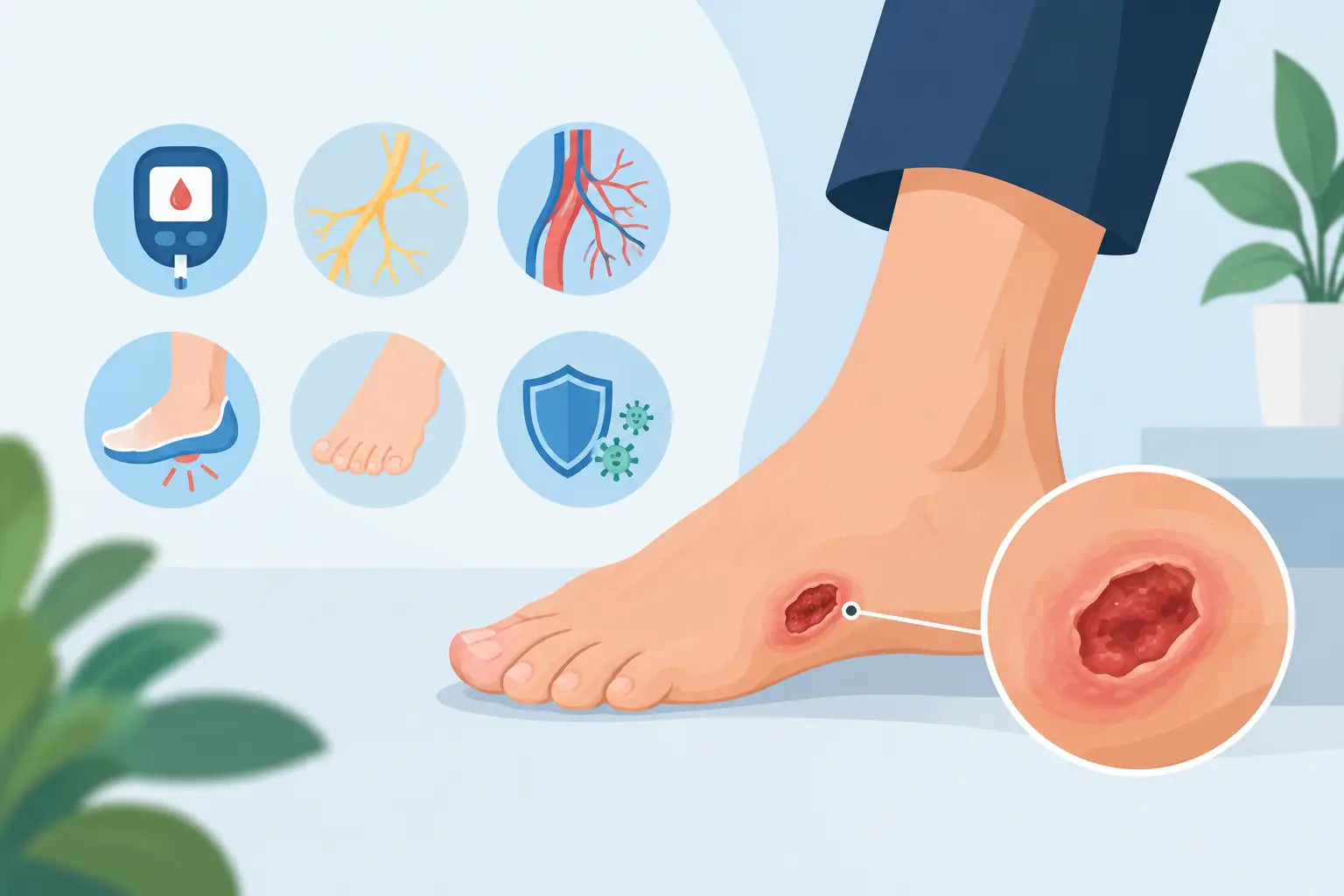
A blister from a new shoe, a small cut near a toenail, or a callus under the ball of the foot can become much more serious when diabetes is involved. Understanding what causes diabetic foot ulcers helps people with diabetes, caregivers, and clinical teams act on small problems before they turn into difficult-to-heal wounds.
A diabetic foot ulcer is an open sore or break in the skin, usually on the bottom of the foot, toes, or areas exposed to pressure and rubbing. Ulcers rarely result from one issue alone. They often develop when reduced feeling, reduced blood flow, repeated pressure, skin damage, and delayed treatment overlap.
What causes diabetic foot ulcers?
The main drivers are diabetic neuropathy and peripheral artery disease, but the immediate trigger may be surprisingly minor. A person may step on something sharp, develop a crack in dry skin, wear a shoe that rubs, or continue walking on a pressure point without realizing it. When the area cannot feel pain normally and does not receive enough blood flow for repair, a small injury can worsen.
High blood glucose also affects the body’s ability to fight infection and heal damaged tissue. The longer glucose levels remain above an individual’s target range, the greater the chance of nerve and blood vessel damage over time. This does not mean every person with diabetes will develop an ulcer, but it does make consistent foot care and diabetes management more necessary.
Loss of feeling from neuropathy
Diabetic peripheral neuropathy damages nerves, most often in the feet and lower legs. It may cause numbness, tingling, burning, or a reduced ability to feel heat, cold, pressure, and pain. Some people have painful neuropathy; others have very little sensation at all.
Loss of feeling changes how injuries are discovered. A pebble in a shoe, a hot surface, or a developing blister would normally cause enough pain to make someone stop and inspect the foot. With neuropathy, that warning signal may be weak or absent. The person may keep walking, creating more pressure and deeper tissue damage.
Neuropathy can also change the shape and function of the foot. Muscle weakness and joint changes may create prominent areas that bear extra weight. These areas are more likely to form calluses, and thick callused skin can hide bleeding or an ulcer underneath.
Poor circulation limits healing
Peripheral artery disease reduces blood flow to the legs and feet. Blood delivers oxygen, nutrients, and immune cells needed to repair tissue and control infection. When circulation is limited, wounds may heal slowly or fail to heal without medical treatment.
Signs that can suggest circulation problems include cool feet, skin color changes, reduced hair growth on the legs or feet, slow-healing cuts, or pain in the calves when walking. Symptoms vary, and some people with diabetes do not feel typical pain because of neuropathy. A clinician can assess pulses, circulation, and whether more vascular testing is needed.
Pressure, friction, and footwear problems
Most diabetic foot ulcers form where pressure happens repeatedly. The forefoot, heel, and tips or sides of the toes are common sites. Shoes that are too tight, too loose, worn out, or shaped poorly for the foot can create friction and pressure. Socks with seams, foreign objects inside shoes, or going barefoot can also lead to skin injury.
A callus is not always harmless in a high-risk foot. It is a sign that an area is receiving repeated pressure. If it becomes thick, it can increase pressure beneath the skin and contribute to tissue breakdown. Calluses should be evaluated and managed by a qualified foot-care professional rather than cut at home with sharp tools or chemical removers.
Skin breakdown and infection
Dry, cracked skin gives bacteria a way into the body. Fungal infections between the toes, ingrown toenails, cuts from trimming nails, burns from heating pads, and blisters can all create an opening in the skin. Once an ulcer is present, infection can spread into nearby skin, soft tissue, or bone.
Diabetes can make infections harder to recognize and control. Redness, warmth, swelling, drainage, odor, fever, or new pain may signal infection, but fever and pain are not always present. Any open area on the foot deserves timely attention, especially if it is not improving quickly.
Factors that raise the risk of a diabetic foot ulcer
Risk rises when several health or lifestyle factors occur together. Previous ulcers or amputations are among the strongest predictors of another ulcer. A history of neuropathy, poor circulation, kidney disease, vision problems, smoking, limited mobility, foot deformities, and difficulty reaching or inspecting the feet can also increase risk.
Foot care routines matter because many ulcers begin as unnoticed changes. Someone with poor vision may not see a blister. Someone with limited flexibility may not be able to check the soles of their feet. A caregiver, family member, mirror, or long-handled inspection tool can help fill that gap.
Blood glucose management is another part of prevention, although it is not a substitute for daily foot checks or professional care. The right target range and treatment plan depend on the person’s health history, medications, and guidance from their diabetes care team.
Warning signs that need prompt medical care
Do not wait for a foot wound to become painful. Contact a healthcare professional promptly for a new blister, cut, crack, sore, drainage, or discoloration that does not resolve. Same-day assessment is especially appropriate for spreading redness, warmth, swelling, pus, a bad odor, black or gray tissue, fever, chills, or a wound that exposes deeper tissue.
A foot that suddenly becomes red, hot, swollen, or misshapen also needs urgent evaluation. In some cases, this can indicate Charcot foot, a serious condition linked to neuropathy that can weaken bones and joints. Continuing to walk on an injured foot can make damage worse.
Until a clinician gives specific advice, avoid putting unnecessary pressure on an open sore. Keep the area clean and protected with an appropriate dressing, but do not use harsh antiseptics, attempt to drain blisters, or remove dead skin yourself. Proper wound treatment may include cleaning, specialized dressings, pressure relief, infection treatment, blood-flow evaluation, and regular follow-up.
Everyday steps that help prevent ulcers
Prevention works best as a daily routine, not a response after a problem appears. Check both feet every day, including the soles, heels, spaces between toes, and around the nails. Look for redness, swelling, cracks, blisters, cuts, calluses, drainage, or changes in color. Wash with lukewarm water, dry carefully, and use moisturizer on dry skin while avoiding the spaces between the toes.
Wear clean, well-fitting socks and shoes whenever walking, including indoors. Before putting shoes on, feel inside for rough seams, objects, or moisture. Shoes should have adequate toe room and should not rub, pinch, or create new red areas. For people with neuropathy, deformities, or a past ulcer, a podiatrist may recommend therapeutic shoes, inserts, or custom offloading options.
Trim toenails straight across if it is safe to do so, and avoid cutting into corners. If nails are thick, curved, hard to reach, or difficult to see, professional nail care is the safer choice. Never use a heating pad or hot water bottle on numb feet, and test bath water with a hand or thermometer first.
Regular foot exams are worth scheduling even when the feet look healthy. A clinician can check sensation, pulses, skin condition, footwear, and pressure areas before they become a wound. For home routines, US MedResources can help patients and caregivers keep practical diabetes and wound-care essentials available for direct delivery.
A daily look at the feet may take less than a minute, but it can be the moment that prevents a small skin problem from becoming a serious wound. If something looks different, act early and call the care team rather than waiting to see whether it improves on its own.