Call Us -
Cart
0
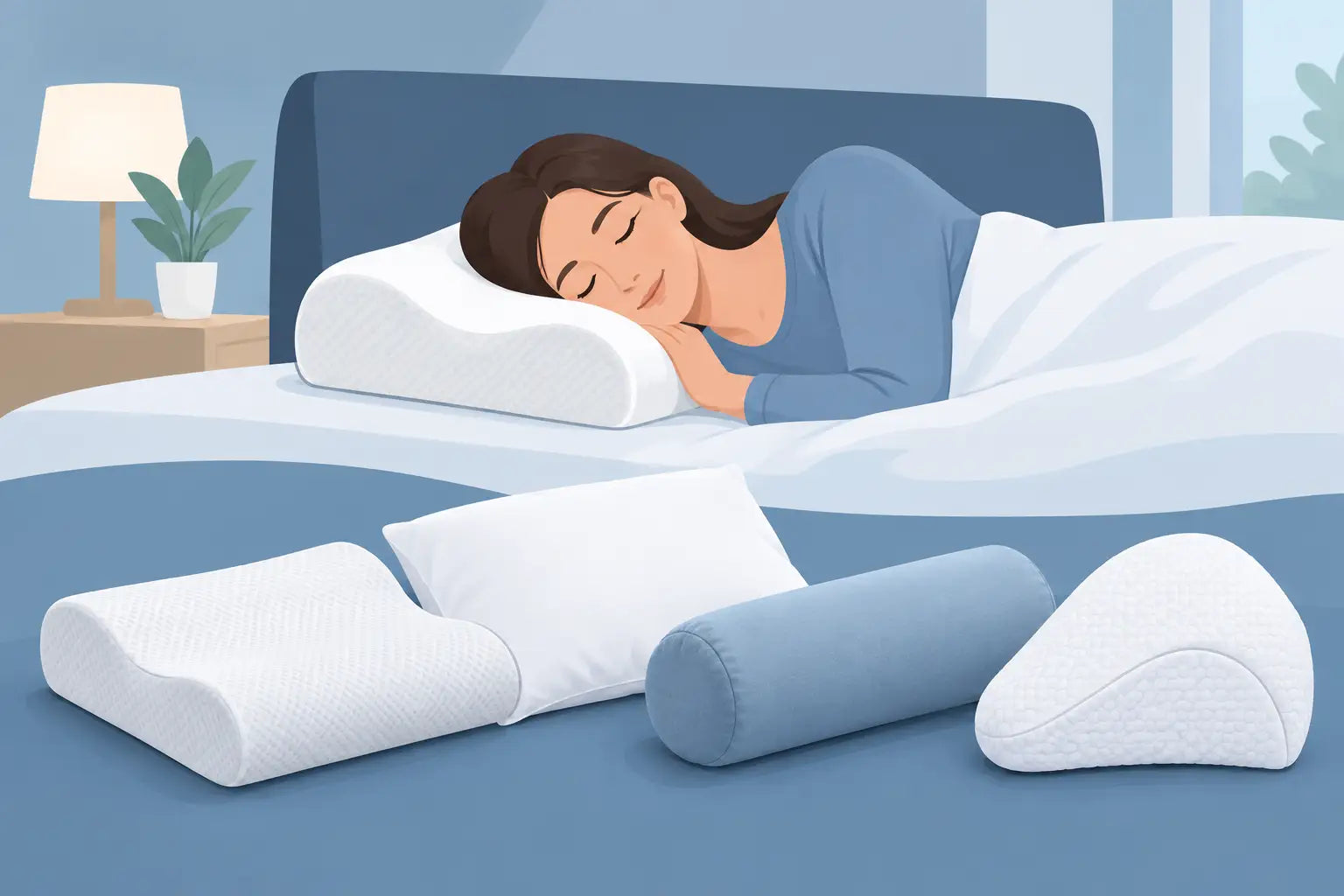
A pillow that feels fine for ten minutes can still leave you waking with a stiff neck, sore shoulder, or aching lower back. The best orthopedic pillows are designed to do more than add softness. They help keep the head, neck, spine, legs, or joints in a more supported position through the night or during recovery at home.
The right choice depends on where you need support and how you sleep. A contoured neck pillow may help one person sleep more comfortably, while a knee pillow or wedge may be the better fit for someone managing hip discomfort, swelling, reflux, or post-procedure positioning. Start with the body area you need to support, then consider shape, height, firmness, and materials.
What Makes an Orthopedic Pillow Different?
An orthopedic pillow is shaped or constructed to support body alignment. Unlike a standard bed pillow, which is often rectangular and evenly filled, an orthopedic design may include contours, cutouts, slopes, or firmer zones that guide the body into a more comfortable resting position.
That does not mean every orthopedic pillow will feel firm or medical. Many use pressure-relieving foam, breathable covers, or adjustable fill to improve comfort. The key difference is purposeful support. A cervical pillow is intended to support the curve of the neck. A knee pillow is intended to keep the legs from pressing together and may help keep the hips more level. A wedge pillow creates elevation that ordinary pillows can rarely hold all night.
Orthopedic pillows can be useful for people managing everyday stiffness, joint discomfort, limited mobility, pregnancy-related positioning needs, or recovery at home. They are also commonly used alongside other comfort measures recommended by a clinician. A pillow is not a substitute for medical evaluation, especially after an injury, surgery, or when pain is severe or persistent.
Best Orthopedic Pillows by Support Need
There is no single best pillow for every sleeper. Matching the pillow category to the problem you are trying to solve is the most reliable way to narrow the options.
Cervical pillows for neck support
Cervical pillows are made to support the natural curve of the neck. Many have a center cradle for the head and raised edges that support the neck. They are often a practical choice for back sleepers and some side sleepers who wake with neck tightness or headaches related to sleeping position.
Height matters more than many buyers expect. A pillow that is too high can push the head forward. One that is too low may allow the neck to bend backward or drop to the side. Side sleepers usually need more loft than back sleepers because the pillow must fill the space between the shoulder and head. If you have broad shoulders, look carefully at the stated pillow height and dimensions.
Contour pillows for side and back sleepers
Contour pillows use molded foam or shaped fill to provide more structured support than a traditional pillow. They may have a dip in the middle, curved edges, or separate zones for the head and neck. These designs work best for sleepers who tend to stay on their back or side rather than changing positions repeatedly.
Memory foam contours closely to the body, which can reduce pressure points. The trade-off is that some foam retains heat or feels slow to respond when you move. Responsive foam or fiber-filled contour pillows may feel easier to reposition, but they may not hold their shape as consistently over time.
Knee pillows for hip, leg, and lower-back comfort
A knee pillow sits between the knees when sleeping on your side. It can reduce direct knee-on-knee pressure and help prevent the top leg from pulling the pelvis forward. For some people, that support makes side sleeping more comfortable when dealing with hip discomfort, sciatica symptoms, pregnancy-related aches, or lower-back strain.
A compact hourglass-shaped knee pillow is easy to place and usually stays between the legs reasonably well. A longer leg pillow supports more of the thigh, knee, calf, and ankle. The longer style can be helpful if your ankles also press together or if you need more complete leg alignment. However, it takes up more space and may feel restrictive for sleepers who turn often.
Wedge pillows for elevation and recovery
Wedge pillows have a gradual incline that raises the upper body, legs, or both. An upper-body wedge may be used for reading in bed, resting with respiratory comfort in mind, or maintaining elevation recommended after a procedure. A leg wedge can help raise the legs when resting and may be useful for swelling management when used as directed by a healthcare professional.
Choose the incline based on how you plan to use it. A lower wedge may be comfortable for general relaxation, while a steeper wedge provides more elevation but can place more pressure on the lower back if used without additional support. For some users, a wedge plus a small lumbar pillow or knee pillow creates a more comfortable setup than a wedge alone.
Coccyx and lumbar support pillows for sitting
Orthopedic support is not limited to the bed. Coccyx cushions, lumbar rolls, and seat cushions are designed for chairs, wheelchairs, vehicles, and recliners. A coccyx cushion commonly has a rear cutout to reduce direct pressure on the tailbone. A lumbar pillow supports the lower back's natural curve during extended sitting.
These pillows can be helpful for work, travel, recovery, and reduced mobility. Fit is important. A thick cushion can change your seated height and may make a chair, car seat, or wheelchair feel less stable. Check the cushion dimensions and consider the depth of the chair before ordering.
How to Choose the Right Firmness and Material
Firmness should support the body without creating a new pressure point. A very soft pillow can flatten quickly and lose its purpose. A very firm pillow may feel uncomfortable, particularly for people with tender shoulders, arthritis, or sensitivity after surgery.
Medium-firm foam is often a dependable starting point for cervical, knee, and wedge pillows because it holds its shape while still providing some cushioning. If you prefer a more traditional feel, shredded foam or adjustable-fill options let you remove or add material. Adjustable designs can be useful when two household members have different comfort needs.
Pay attention to heat and cleaning needs. Gel-infused foam, ventilated foam, and breathable covers can be more comfortable for warm sleepers. A removable, washable cover is especially useful for daily-use pillows, recovery care, and shared household environments. If allergies are a concern, review material details and choose a cover that can be cleaned regularly.
Measure Your Sleep Position Before You Buy
Your usual sleep position should guide the purchase more than a pillow's appearance or marketing language. Back sleepers generally need moderate neck support without excessive height. Side sleepers need enough loft to keep the head level with the spine. Stomach sleepers usually need a very low pillow, if any, because a thick pillow can strain the neck in a rotated position.
If you use a CPAP mask, wear glasses before bed, have shoulder pain, or have limited mobility, consider how easily you can reposition the pillow. A highly sculpted design can be excellent for alignment but less convenient if you move frequently or need assistance changing positions. For people recovering from surgery, always follow discharge instructions on elevation, side sleeping, and weight-bearing precautions.
Avoid These Common Pillow Buying Mistakes
Do not assume bigger means better. An oversized cervical pillow can overextend the neck, while an extra-thick knee pillow may separate the legs more than is comfortable. A pillow should support a neutral position, not force the body into a dramatic angle.
Avoid replacing all your pillows at once before you know what works. Introduce one new support pillow and give your body several nights to adjust, unless it causes increased pain, numbness, tingling, or poor sleep. In that case, stop using it and speak with a healthcare professional if symptoms continue.
Also check whether the product is intended for sleeping, sitting, elevation, or travel. A lumbar roll designed for a desk chair is not necessarily appropriate for overnight use. Using a pillow for its intended purpose helps protect both comfort and positioning.
When to Ask a Healthcare Professional
Orthopedic pillows can support a comfortable routine, but they should not delay care for concerning symptoms. Seek clinical guidance for new weakness, loss of sensation, severe neck or back pain, pain after a fall, persistent swelling, breathing difficulty when lying down, or symptoms that worsen despite rest.
People with recent orthopedic surgery, pressure injury risk, circulatory conditions, or prescribed positioning requirements should ask their surgeon, physical therapist, nurse, or physician which pillow style and elevation are appropriate. A well-chosen support product works best when it fits the care plan.
Comfort at home often comes down to small, practical adjustments. Choose a pillow that addresses the area you need to support, use it consistently, and give yourself a realistic adjustment period. When you are ready to improve your sleep or recovery setup, shop for orthopedic support products with the dimensions, materials, and care features that fit your daily needs.