Call Us -
Cart
0
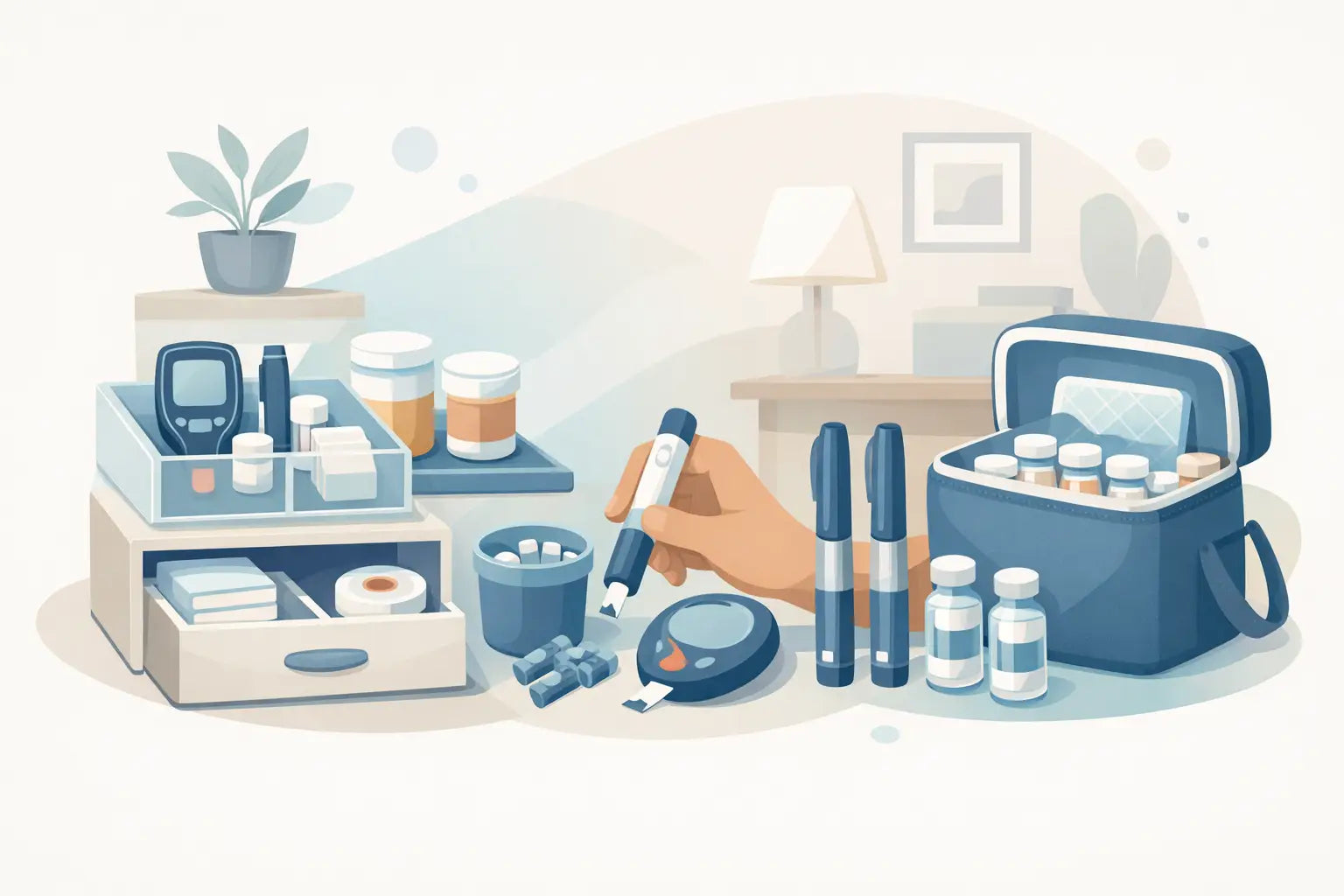
A low blood sugar moment is not the time to search through a bathroom drawer for test strips or wonder where the fast-acting glucose went. Learning how to organize diabetic supplies creates a safer, less stressful routine for daily diabetes care. The right system should make essential items easy to find, protect supplies from heat and moisture, and show you when it is time to reorder.
You do not need a complicated storage setup. A few clearly defined zones, regular expiration checks, and a ready-to-go travel kit can help individuals, caregivers, and busy households stay prepared.
Start by sorting every diabetic supply
Begin with one complete inventory. Gather supplies from purses, kitchen counters, bedside tables, cars, and cabinets so you can see what you have. Check labels and packaging as you go. This step often reveals duplicate items, opened boxes, expired products, and supplies that need to be reordered.
Sort items by how and when they are used rather than by where they happened to be stored. A person using insulin injections will need a different setup than someone using an insulin pump or continuous glucose monitor, but the principle is the same: supplies used together should stay together.
Create separate groups for these four categories:
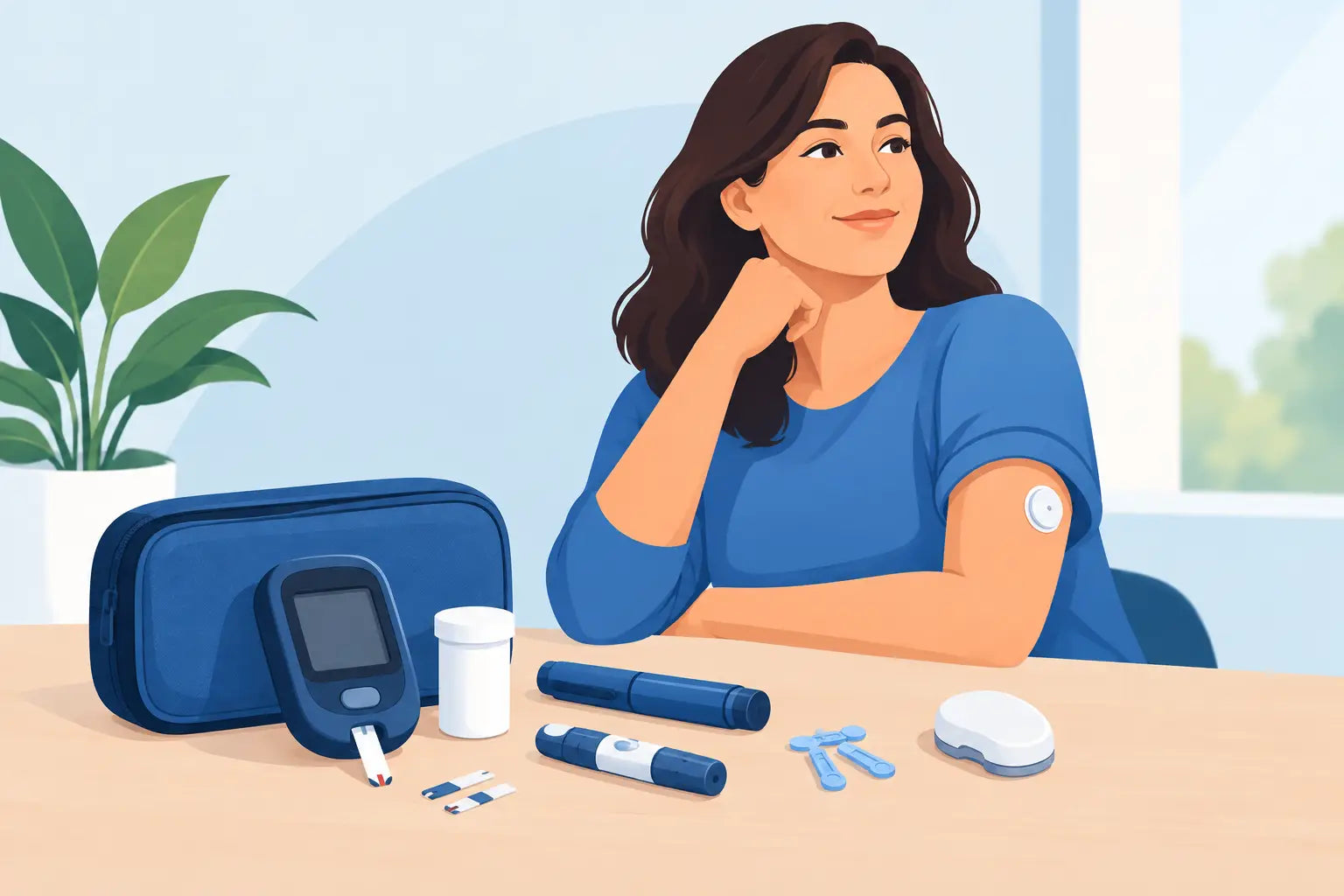
- Daily testing supplies, such as meters, test strips, lancets, alcohol swabs, and logbooks
- Medication supplies, including insulin, pen needles, syringes, pump supplies, and injection-site materials
- CGM or pump supplies, such as sensors, transmitters, applicators, adhesive patches, chargers, and backup batteries
- Emergency and travel supplies, including glucose tablets or gel, glucagon if prescribed, snacks, and a backup testing method
How to organize diabetic supplies by use and storage needs
Once supplies are sorted, choose a central location that is clean, dry, and easy to reach. A kitchen cabinet, hall closet shelf, or dedicated storage cart often works better than a bathroom, where humidity can be high. Avoid windowsills, vehicles, garages, and areas near stoves or heating vents. Temperature swings and moisture can damage medications, meters, strips, sensors, and adhesive products.
Use bins, handled caddies, drawer organizers, or clear containers with large labels. Clear containers make it easier to check inventory at a glance, while opaque bins may be better for supplies that should be protected from light. The best choice depends on the product instructions and the household's needs.
Keep the supplies used most often at eye level or in the front of a drawer. Store backstock behind them. This simple first-in, first-out approach helps ensure older products are used before newer ones, reducing avoidable waste.
Set up a daily care station
A daily station is the small group of items needed for a regular glucose check, injection, sensor check, or pump task. Keep it in a place where care normally happens, such as a kitchen drawer or a portable caddy near the preferred chair. Include only current-use items so the station stays uncluttered.
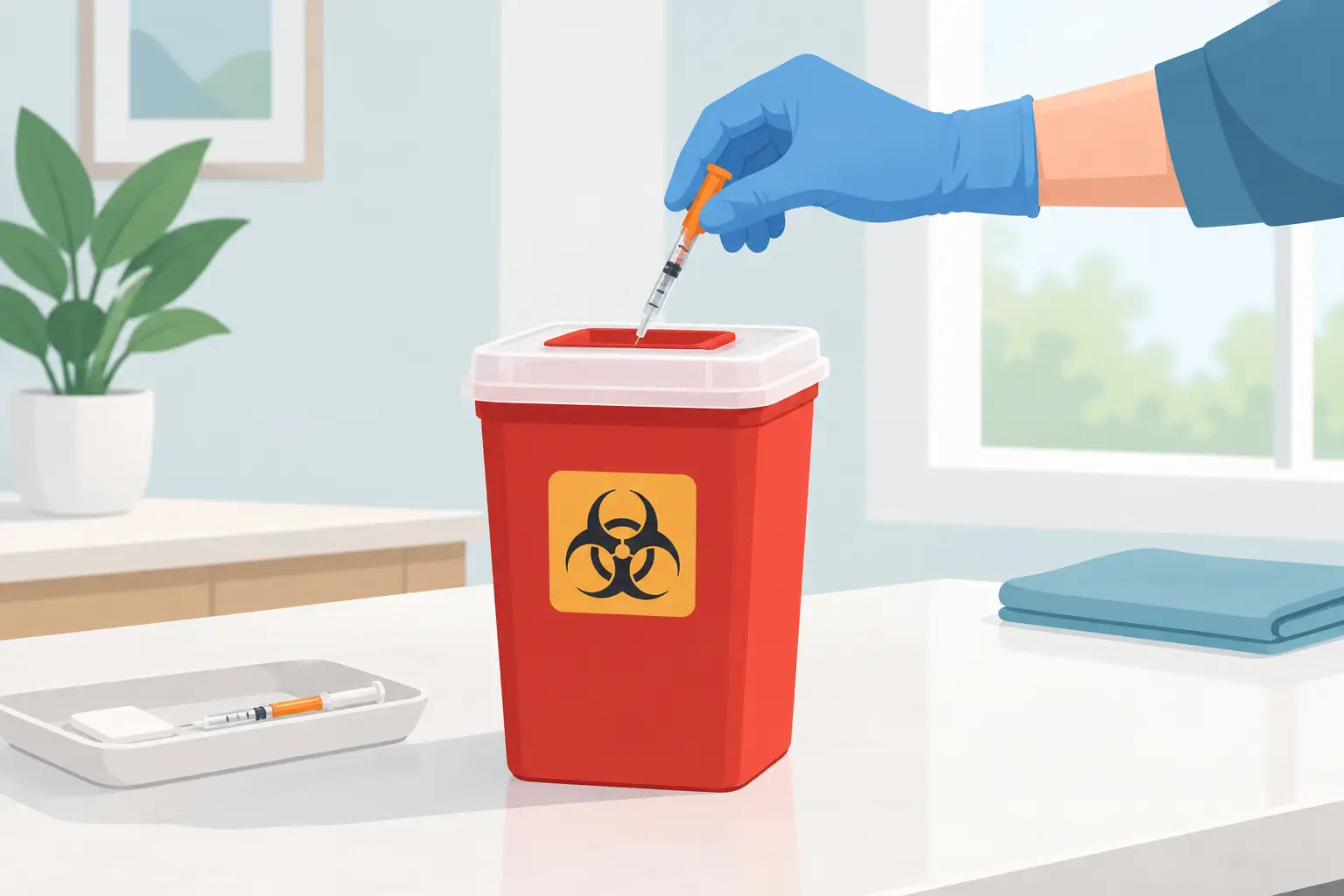
For example, a testing station may hold a glucose meter, current vial of test strips, lancets, lancing device, alcohol swabs, and sharps container. A person using insulin pens may keep the active pen, pen needles, and a sharps container nearby, provided the medication is stored exactly as its manufacturer directs.
Do not assume all insulin has the same storage requirements. Unopened insulin often needs refrigeration, while an opened vial or pen may be kept at room temperature for a limited period. Those details vary by product. Check the package insert or ask a pharmacist, and write the in-use date on the label when opening a new insulin pen or vial.
Create a protected backstock area
Your backstock area holds unopened boxes and replacement supplies. Use labeled bins for test strips, lancets, infusion sets, sensors, adhesive products, and other recurring items. Keep each product in its original packaging whenever possible. Original boxes provide expiration dates, lot numbers, instructions, and protection from light or damage.
Do not stockpile far beyond what you can use before expiration. Larger orders can be convenient, especially when delivery schedules are unpredictable, but excess supplies take up space and may expire before use. A practical amount is often one open box plus a reasonable reserve based on prescription timing, insurance coverage, travel plans, and provider recommendations.
Keep emergency treatment visible and separate
Fast-acting glucose should never be buried under routine supplies. Store glucose tablets, glucose gel, juice boxes, or another clinician-recommended treatment in an easy-to-see location. Keep a second set in the bedroom, workplace, school bag, or other place where low blood sugar may occur.
If glucagon has been prescribed, place it where household members or caregivers can find it quickly. Make sure the people most likely to help know what it is, where it is stored, and how to follow the product instructions. Check its expiration date during your regular supply review.
Emergency items need to be accessible, but they should still be kept away from young children and pets when appropriate. Balance quick access with safe storage for your home.
Build a diabetic supply travel kit
A travel kit prevents the common problem of taking only enough supplies for a normal day. Delays, spilled drinks, lost bags, sensor failures, and unexpected low readings can happen anywhere. Keep a small zippered case or durable pouch stocked and ready to grab.
Your kit should include a backup glucose meter and test strips if you use a CGM, along with lancets, alcohol swabs, fast-acting glucose, snacks, extra batteries or charging equipment, and spare sensor or pump supplies when applicable. If you use insulin, carry it according to the storage instructions for your medication and keep it with you rather than in checked luggage.
The right amount of backup depends on the length and type of trip. A short afternoon outing may only require low-treatment items and a meter. Air travel, a road trip, or time away from home may call for several extra days of supplies. Before leaving, check that your travel kit has current products, not leftover strips or medications that are close to expiration.
Make reordering part of the routine
Organization works best when it includes a reorder trigger. Waiting until the last sensor, pen needle, or box of strips is nearly gone leaves little room for shipping delays, insurance questions, or prescription renewals.
Choose one method that fits your routine. Some people place a note inside the final unopened box. Others add a reminder to their phone when opening a new package. Caregivers managing supplies for another person may find a simple inventory sheet on the cabinet door helpful.
Review supply levels once a month, or more often if products are used quickly. Confirm prescription refill dates, check shipping addresses, and look for items that need provider authorization. For home users and care practices alike, dependable ordering is easier when supplies are tracked before they become urgent. US MedResources offers diabetes care supplies delivered directly to your door, helping make routine restocking more manageable.
Do a monthly expiration and safety check
Set aside 10 minutes each month to inspect your system. Look for expired test strips, damaged packaging, worn meter batteries, empty sharps containers, and supplies affected by heat or moisture. Check CGM sensors, transmitters, and pump supplies against the dates on the package.
If a product has been exposed to extreme temperatures, looks damaged, or produces readings that do not match symptoms, do not guess. Follow the manufacturer's instructions and contact a pharmacist, diabetes educator, or healthcare provider for guidance. Keep a backup meter available if you use a CGM, because technology can fail or require confirmation during certain situations.
A well-organized diabetes supply area does more than make a cabinet look neat. It gives you a clear view of what is ready, what is running low, and what needs attention. Set up the system once, adjust it to your routine, and let it make each day of diabetes care a little easier to manage.