Call Us -
Cart
0
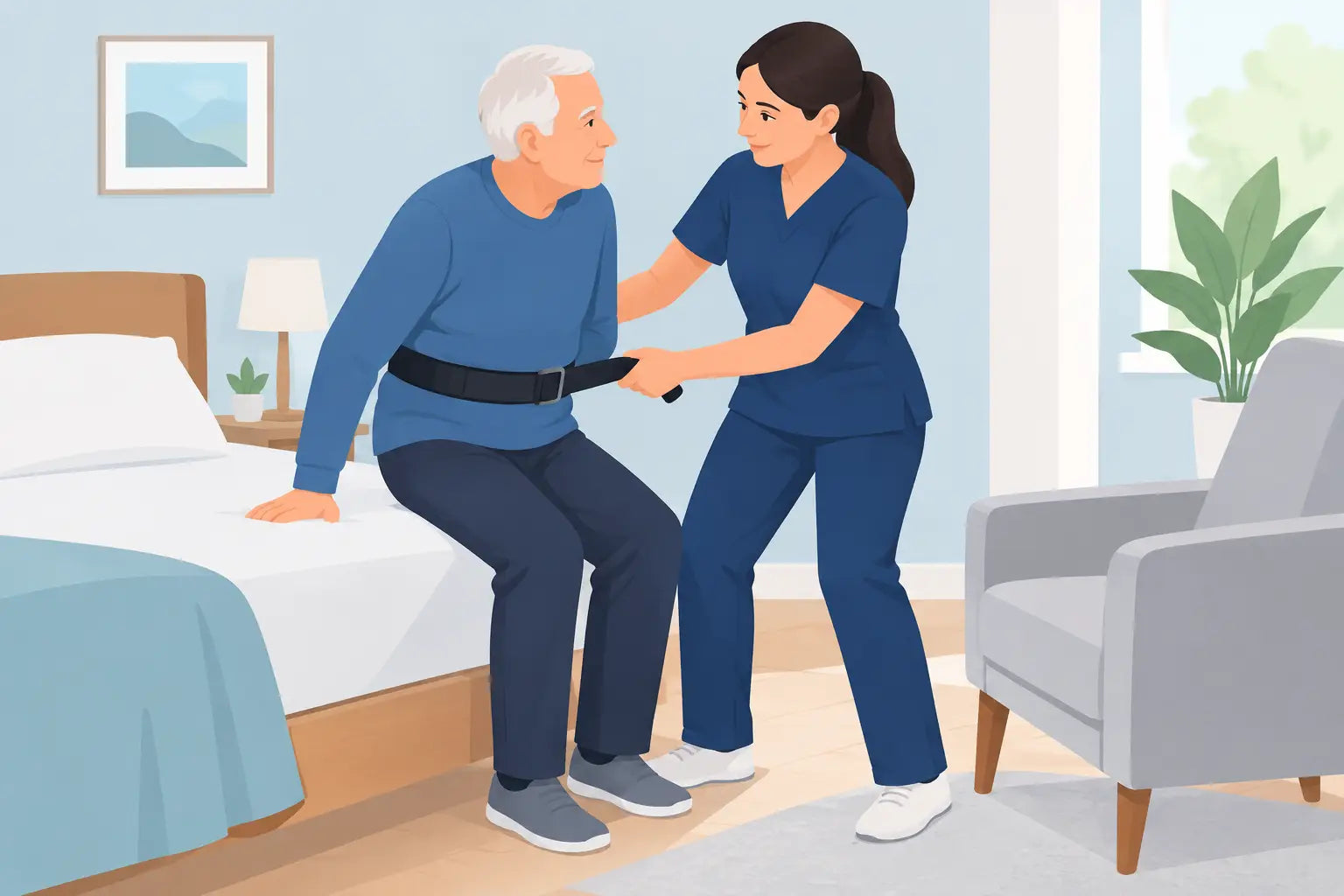
A gait belt can make a bed-to-chair transfer feel more controlled for both the caregiver and the person receiving help. But it is not a lifting strap. Knowing how to use a gait belt correctly means using it to steady and guide someone who can participate in the movement, while protecting your own back and reducing the chance of a fall.
A physical therapist, occupational therapist, nurse, or other qualified clinician should demonstrate the technique for the individual’s needs whenever possible. Balance, strength, recent surgery, weight-bearing restrictions, and medical equipment all affect whether a gait belt is appropriate and how it should be used.
What a Gait Belt Does - and Does Not Do
A gait belt, also called a transfer belt, is a wide strap secured around a person’s waist. It gives a caregiver a secure handhold while assisting with standing, pivoting, walking, or sitting down. The belt can help the caregiver respond quickly if the person loses balance without grabbing their arm, clothing, or body.
The belt does not replace the person’s ability to bear weight. If someone cannot support any of their own weight, has unpredictable collapse episodes, or requires more than one caregiver for a transfer, a mechanical lift or another transfer method may be safer. Trying to lift a person with a gait belt can lead to injury for both people.
A gait belt is generally used over regular clothing, not directly against bare skin. It should fit snugly enough to stay in place but not so tightly that it causes discomfort or limits breathing.
Before You Use a Gait Belt
Start by checking the care plan and the environment. Ask the person how they are feeling and whether they are dizzy, weak, in pain, or short of breath. A person who was steady this morning may not be safe to transfer alone later in the day.
Clear cords, rugs, pets, clutter, and low furniture from the path. Make sure the destination is close enough and ready to use. For a wheelchair transfer, position the wheelchair at a slight angle to the person’s stronger side, lock both brakes, and move the footrests out of the way. For a bed transfer, adjust the bed height so the person’s feet can rest flat on the floor and the caregiver does not have to bend deeply.
The person should wear stable, non-slip footwear. Avoid socks alone on smooth flooring. If they use a walker, cane, or other mobility aid, have it within reach but do not expect it to support them during the first part of a standing transfer unless a clinician has instructed you to do so.
Do not use a gait belt without clinical direction if the person has a recent abdominal, back, or chest surgery; a feeding tube, ostomy, catheter, drain, or wound in the belt area; severe osteoporosis; painful ribs; or a condition that makes pressure around the waist unsafe. In these situations, call the care team for a safer approach.
How to Use a Gait Belt Step by Step
Place the belt around the person’s waist over clothing. For most transfers, position it above the hips and below the rib cage. Keep it away from any incision, tube, wound dressing, or sensitive area. Thread the belt through the buckle according to the belt design and pull it snug.
You should be able to slide two or three fingers between the belt and the person’s body. If you can easily pull the belt upward or rotate it around the waist, it is too loose. Check that the loose end is secured and will not drag or catch on furniture.
Explain the plan before moving. Use short, direct instructions, such as: “Scoot forward, place both feet under you, lean forward, and push from the chair when we count to three.” Ask the person to push up from the bed or chair armrests instead of pulling on your shoulders or neck.
Stand close to the person with your feet apart for a stable base. If one side is weaker, position yourself slightly toward that side, while allowing the person to turn toward their stronger side when appropriate. Bend at your hips and knees, keep your back in a neutral position, and avoid twisting.
Hold the gait belt from the sides or back using an underhand grip when possible. Do not grip the buckle, and do not pull straight upward. Your job is to guide and steady the person as they rise, not to hoist them from the surface.
Count aloud so you move together. As the person stands, shift your weight rather than pulling with your arms. Let them pause after standing. Check for dizziness, knee buckling, or loss of balance before beginning a pivot or walk.
For a pivot transfer, take small steps together toward the destination. Keep the person close to the chair, toilet, or bed before asking them to reach back for the surface. Once they feel the surface behind their legs, have them reach back, bend their knees, and lower slowly. Continue holding the belt until they are fully seated and balanced.
Using a Gait Belt During Walking Assistance
When assisting someone who is walking, stay slightly behind and to one side, typically on the weaker side. Keep one hand on the gait belt and the other available to manage a walker or provide light support if needed. Do not walk several feet ahead while pulling the belt forward. That can throw the person off balance.
Use a calm pace and choose short distances at first. Watch for shuffling, leaning, knee weakness, breathlessness, confusion, or a change in skin color. A gait belt gives you control, but it cannot prevent every fall. If the person begins to go down, do not try to hold them upright with your back or arms. Keep hold of the belt if you can, widen your stance, and guide them down as safely as possible, protecting their head. Call for help and follow the care plan.
Common Gait Belt Mistakes to Avoid
The most common problem is treating the belt like a handle for lifting. This places strain on the caregiver and can cause pain or skin injury for the person wearing it. The person should contribute as much as they safely can, and the caregiver should use body position and controlled movement rather than arm strength.
Avoid placing the belt over bare skin, a surgical site, or medical tubing. Also avoid using it when the person is agitated, unable to follow basic directions, or too weak to help with the movement. In those moments, waiting for another trained caregiver or using the recommended transfer equipment is the safer choice.
Do not leave the gait belt on after the transfer unless a clinician has specifically instructed you to do so. It can bunch up, become uncomfortable, interfere with a seated position, or create a snagging risk.
Choosing the Right Belt for the Job
A standard cotton or nylon gait belt works well for many routine transfers and walking assistance tasks. Some belts include a quick-release buckle, while others use a metal buckle that allows a very secure, adjustable fit. Belts with multiple hand loops may provide better grip options for caregivers, especially when helping a larger adult or assisting from different angles.
The best choice depends on the person’s size, mobility level, clothing, and clinician recommendations. A belt should be long enough to fasten securely without excessive loose material. Inspect it before each use for fraying, damaged stitching, worn buckles, or contamination. Replace a damaged belt rather than trying to repair it.
When to Call a Clinician Before Trying Again
Stop and ask for guidance if transfers suddenly become harder, the person reports new pain, their knees buckle, or they need more help than usual. New dizziness, fainting, confusion, chest discomfort, or shortness of breath requires prompt medical attention, not another attempt at walking.
A gait belt is a simple home-care supply, but safe use is built on preparation, communication, and the right level of assistance. For dependable transfer belts and other practical mobility supplies delivered directly to your door, US MedResources can help you prepare for safer care at home.