Call Us -
Cart
0
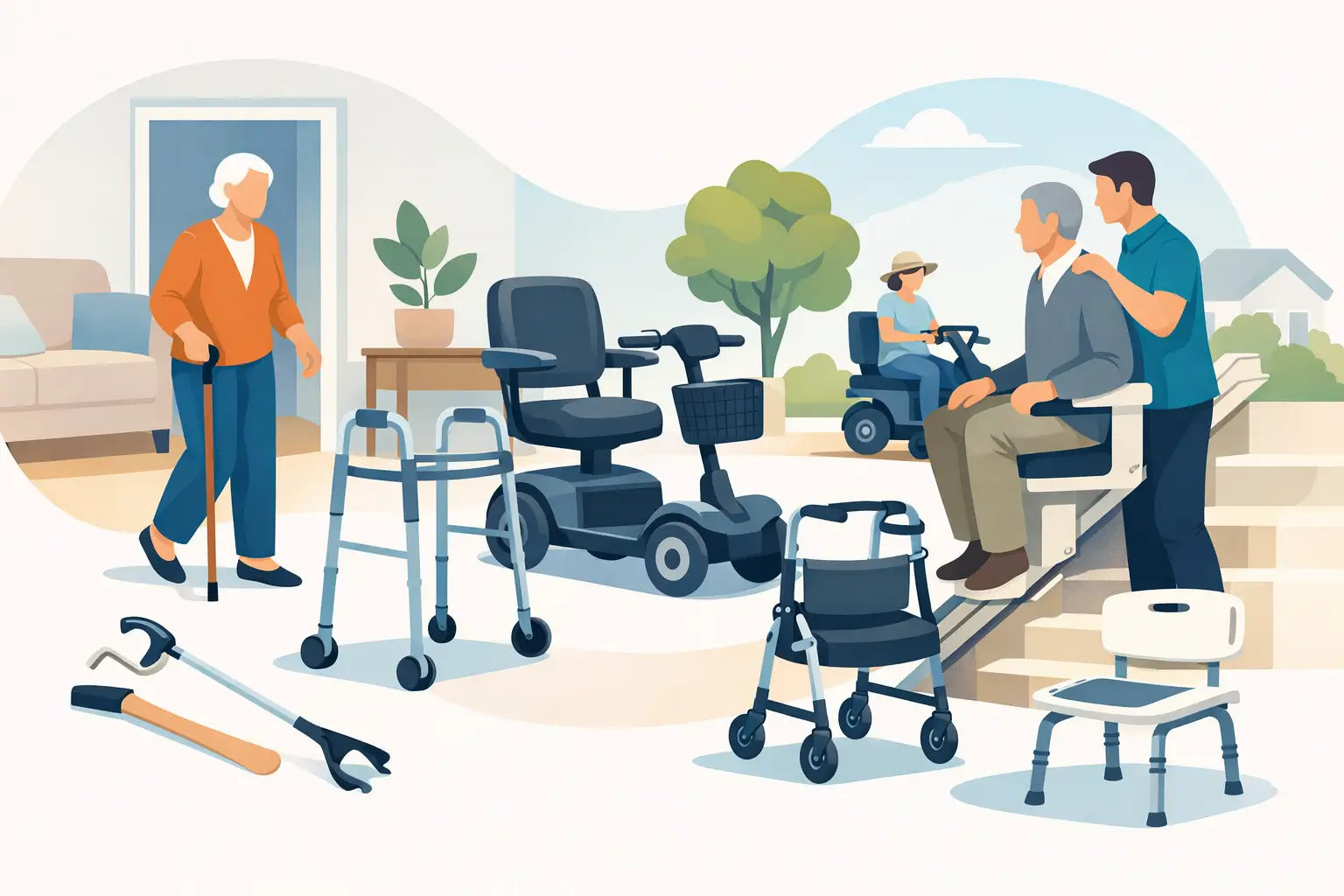
A walk to the mailbox, a trip through the grocery store, or standing long enough to prepare dinner can feel like a major task when arthritis affects the hips, knees, feet, hands, or spine. The right mobility aids for arthritis can reduce strain, improve stability, and help people stay involved in the routines that matter most.
The best choice is not always the biggest or most advanced device. A cane may be enough for occasional knee pain, while a walker may provide better support after a flare-up or surgery. The goal is practical: choose an aid that supports safer movement without making daily life harder to manage.
Start With the Movement Problem
Arthritis affects people differently. Some people need help with balance. Others need to take weight off one painful joint, manage fatigue, or travel farther without severe discomfort. Before choosing equipment, consider when and where mobility becomes difficult.
Think about whether pain is worse after sitting, during longer walks, on stairs, or when moving over uneven pavement. Also consider the setting. A narrow bathroom, crowded home, apartment elevator, clinic hallway, or outdoor walkway may call for different features.
It is also useful to consider hand strength and grip. Arthritis in the fingers, wrists, or shoulders can make it difficult to use traditional handles, operate brakes, or fold a device. A mobility aid should make movement easier, not create a new source of pain.
Common Mobility Aids for Arthritis
Canes for Mild Support and Joint Offloading
A cane can be a practical option for people who are generally steady on their feet but need help with one painful hip, knee, ankle, or foot. It can improve balance and reduce pressure on the affected side when used correctly.
For a painful leg, the cane is typically held in the opposite hand. This allows the cane and the painful leg to move together, helping distribute weight more effectively. Proper height matters: when standing upright with shoes on, the handle should generally meet the crease of the wrist.
Standard single-tip canes are lightweight and easy to use in tight spaces. Quad canes have a broader base and can stand on their own, but they may feel less convenient on stairs or uneven ground. Offset handles can offer a more stable grip, while foam or ergonomic handles may be more comfortable for people with hand arthritis.
A cane is not the right choice for significant balance problems or when both legs need substantial support. In those situations, a walker may be safer.
Walkers for More Stable Support
Walkers provide a wider base of support than canes and can help when arthritis causes weakness, unsteadiness, or pain in both lower-body joints. A standard walker has four legs and must be lifted slightly with each step. This design offers dependable stability, but lifting can be tiring for people with shoulder, wrist, or hand pain.
A two-wheel walker has front wheels and rear legs with glide caps. It moves forward more easily while still offering substantial support. This can be a good middle ground for many home users, particularly on level indoor flooring.
Walker height should allow a relaxed bend at the elbow rather than forcing the user to hunch or reach. The device also needs to fit through doorways and around furniture. Measuring the narrowest spaces in the home before ordering can prevent a frustrating mismatch.
For anyone new to a walker, a physical therapist or other qualified clinician can provide guidance on fit and safe use. This is especially valuable after a fall, joint replacement, or major change in mobility.
Rollators for Walking Farther With Less Fatigue
Rollators are rolling walkers, usually with four wheels, hand brakes, a seat, and a storage pouch or basket. They are often a strong option for arthritis patients who can walk independently but need support, rest breaks, and a way to carry personal items.
The built-in seat is one of the main advantages. It gives users a place to rest when pain or fatigue increases during errands, appointments, or walks around the neighborhood. Storage can also reduce the need to carry bags, which may aggravate hand, shoulder, or back pain.
The trade-off is that rollators require good brake control and attention to safety. Brakes should be squeezed before slowing or stopping, and the parking brakes must be locked before sitting. People with reduced hand strength should test whether the brake handles are easy to use. A rollator can move quickly if it is pushed too far ahead, so it may not be appropriate for someone who needs to put substantial body weight through the frame.
Choose wheel size based on where the rollator will be used. Smaller wheels generally work well indoors. Larger wheels often handle sidewalks, thresholds, and uneven outdoor surfaces more comfortably. Seat height, folded width, weight capacity, and overall device weight are also practical details worth checking.
Wheelchairs and Transport Chairs for Longer Distances
When arthritis makes extended walking unrealistic, a wheelchair or transport chair can help preserve access to family events, medical visits, shopping, and community activities. A transport chair is designed to be pushed by a caregiver and is often lighter and easier to place in a vehicle. A self-propelled wheelchair has larger rear wheels that allow the user to move independently.
This choice depends on upper-body strength, caregiver availability, and how often the chair will be used. Propelling a wheelchair can be difficult for people with arthritis in the hands, wrists, elbows, or shoulders. In that case, a transport chair may be more practical for occasional use.
Comfort and fit matter as much as portability. Check seat width, depth, footrest position, armrest style, and weight capacity. A chair that is too narrow, too wide, or poorly adjusted can cause discomfort and make transfers more difficult.
Mobility Scooters for Energy Conservation
Mobility scooters can be useful for people who can transfer safely and walk short distances but cannot comfortably cover larger areas. They may help with shopping centers, outdoor gatherings, larger homes, and community activities.
Scooters require planning. Users need enough space to turn, a safe place to charge and store the unit, and a vehicle or lift solution if transportation is needed. Three-wheel models can offer a tighter turning radius, while four-wheel models may feel more stable outdoors. Battery range, ground clearance, seat comfort, and weight capacity should match the expected use.
A scooter does not replace the need to maintain safe walking ability when possible. For many people, it is a tool for conserving energy and reducing pain during longer outings, not a device used for every movement at home.
Features That Matter When Arthritis Affects the Hands
Arthritis in the hands can change which mobility aid feels manageable. Look for padded or contoured grips, easy-to-reach brakes, lightweight frames, and simple folding mechanisms. Avoid selecting equipment based only on appearance or price if the handles are uncomfortable or the controls are hard to operate.
For walkers and rollators, accessories can make a real difference. A tray, cup holder, basket, or pouch can reduce carrying demands. Glides can help a walker move smoothly across indoor surfaces. For canes, a secure rubber tip is essential for traction and should be replaced when worn.
Keep in mind that added accessories also add weight or width. A rollator with every available feature may be less convenient if it no longer fits easily in the car or through a narrow hallway.
Set Up the Home for Safer Use
A mobility aid works best in a home arranged for safe movement. Clear loose cords, small rugs, footstools, and clutter from common walking paths. Add adequate lighting near stairs, beds, bathrooms, and entrances. Keep frequently used items within easy reach to reduce repeated bending, stretching, or carrying.
Bathrooms deserve special attention because wet surfaces increase fall risk. Depending on individual needs, grab bars, shower seating, raised toilet seats, and non-slip surfaces may support safer routines alongside a cane or walker. For people with arthritis, reducing the strain of standing, lowering, and rising can be just as helpful as improving walking support.
Know When to Ask for Professional Guidance
New or worsening pain, repeated near-falls, dizziness, numbness, sudden weakness, or a recent fall are reasons to speak with a healthcare professional. A clinician or physical therapist can help identify whether a cane, walker, rollator, wheelchair, or another option is appropriate and can check that it is adjusted correctly.
This step is particularly worthwhile for people with multiple conditions, recent surgery, severe joint deformity, or changes in vision or balance. The safest device is the one that fits the person, the condition, and the environment.
US MedResources offers practical home medical equipment options to support everyday mobility needs, with convenient ordering for individuals, caregivers, and healthcare practices. When selecting a mobility aid, focus on the next activity you want to do more safely and comfortably. The right support can help make that activity feel possible again.