Call Us -
Cart
0

A room can look organized and still slow down care. The missing item is often something basic: a fresh exam table cover, the correct speculum size, a working blood pressure cuff, or a box of tissues within reach. Choosing the best clinic exam room supplies means building each room around the actual flow of a patient visit, so clinicians can focus on the patient instead of searching for essentials.
For a primary care office, urgent care center, specialty practice, or therapy clinic, the right supply plan balances three needs: clinical readiness, infection prevention, and patient comfort. The best setup is not necessarily the room with the most products. It is the room where the products used every day are dependable, easy to reach, and replenished before they run out.
Start With the Exam Table and Patient Area
The exam table is the center of most clinical visits, so it deserves the most attention. Disposable table paper helps maintain a clean surface between patients and speeds up room turnover. Choose a roll width that fits the table and a paper weight that resists tearing during transfers and examinations. Thinner paper may lower the per-roll cost, but frequent tearing can create waste and frustration.
A sturdy step stool is equally practical, especially in practices serving older adults, patients with mobility limitations, and children. Look for a non-slip surface and stable base. If the practice performs procedures or supports recovery care, consider whether a transfer aid, positioning wedge, or disposable underpad should be kept nearby as well.
Patient comfort supports better care. Keep tissues, a small waste receptacle, disposable drapes or gowns, and a clean blanket option available when appropriate. A patient who feels cold, exposed, or unsteady may have a harder time following instructions or discussing sensitive concerns. These are small details, but they shape the visit.
Best Clinic Exam Room Supplies for Core Assessment
Every exam room should support a complete set of routine vital signs and basic assessment tasks without requiring staff to borrow equipment from another room. The exact selection depends on the specialty, but dependable basics include a blood pressure monitor or sphygmomanometer, cuffs in multiple sizes, a stethoscope, thermometer with compatible probe covers, pulse oximeter, scale, and height measurement tool.
Cuff sizing is a common weak spot. A standard adult cuff will not give every patient an accurate reading. Clinics should stock pediatric, small adult, large adult, and extra-large options based on the patients they see. Reusable cuffs can be cost-effective, while single-patient or disposable options may make more sense for isolation procedures or high-turnover settings.
For physical exams, maintain a ready supply of penlights, tongue depressors, reflex hammers, measuring tapes, and disposable gloves. Otoscope and ophthalmoscope tips should match the equipment already in use. Before placing a bulk order, confirm compatibility. A lower-priced item is not a value if it cannot be used with your diagnostic instrument.
Specialty needs should be planned by service line, not added at random. A women’s health room may require speculums, lubricant, collection supplies, and drapes. A wound care room may need saline, gauze, dressings, tape, skin prep, and disposal supplies. A diabetic foot exam area may need monofilaments and circulation assessment tools. Build a core room standard, then add a specialty module for rooms that need it.
Make Infection Prevention Easy to Follow
Infection prevention works best when the correct item is exactly where it is needed. If hand sanitizer is across the room or disinfecting wipes are stored in a hallway cabinet, staff may lose time or take shortcuts during a busy day. Place hand hygiene supplies near the entry and point of care, then establish a clear restocking responsibility.
Gloves, masks, protective eyewear, gowns, disinfectants, and biohazard bags should be selected with the office’s workflow in mind. Gloves need to be available in a full size range. Keep boxes in wall-mounted holders or organized drawer systems so they stay clean and visible. Nitrile gloves are a practical default in many clinics because they avoid natural rubber latex concerns, but the best choice can depend on procedure type, durability needs, and staff preference.
Surface disinfectants should be appropriate for the surfaces and equipment being cleaned. Follow manufacturer contact-time instructions rather than wiping a surface and immediately using it. This is also a reason to avoid overstocking several similar disinfectants. A simpler, standardized cleaning system can make staff training easier and reduce product confusion.
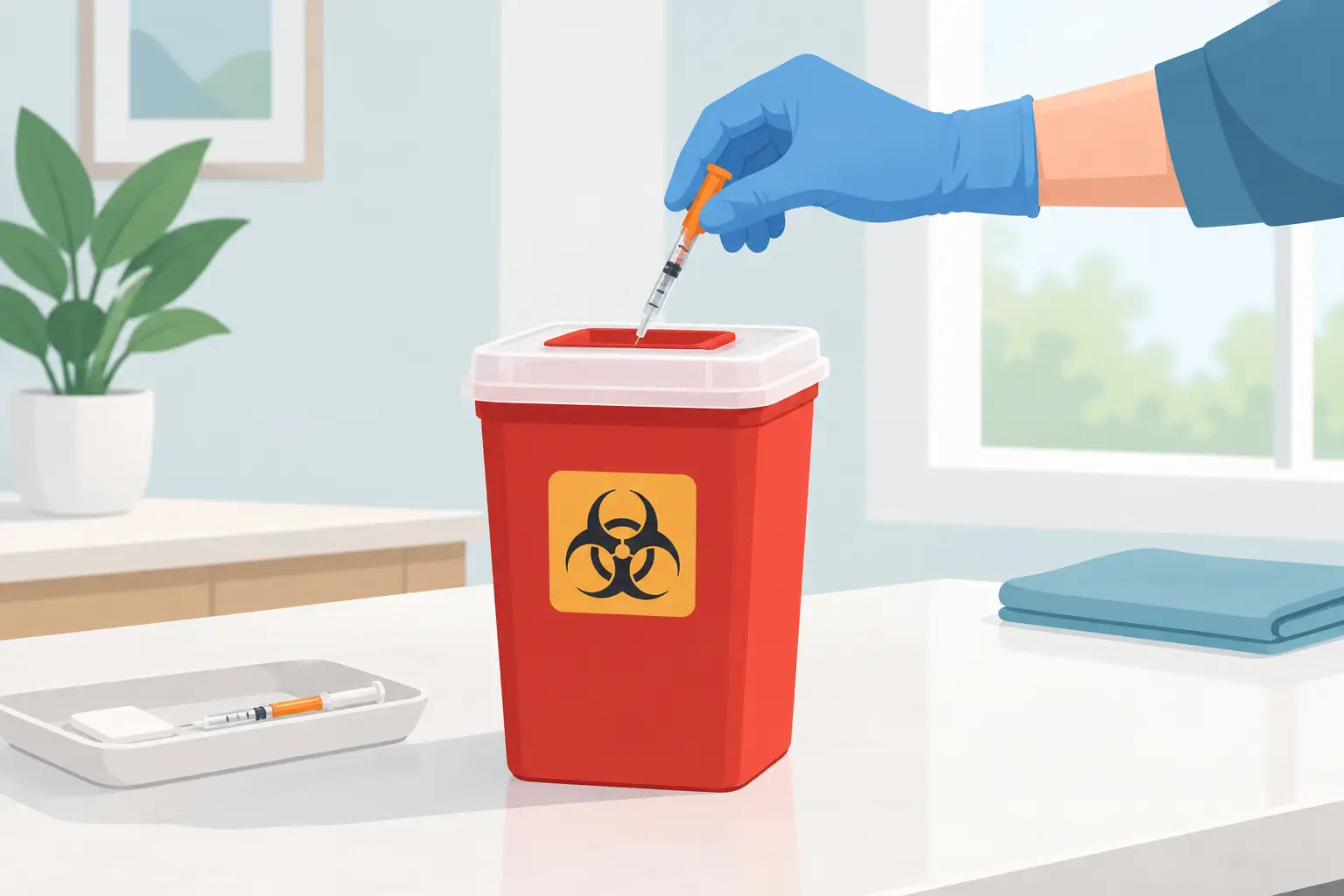
Sharps containers belong where injections, lancets, needles, or minor procedures take place. Select the correct size for the room’s volume and mount or position it securely. Containers that are too small fill quickly; containers that are too large can take up valuable workspace. Check fill lines regularly and replace containers before they become overfilled.
Stock Procedure and Treatment Supplies by Frequency
Some supplies are used in nearly every room, while others should be available only where a procedure calls for them. Separating these two categories keeps rooms useful without turning cabinets into cluttered storage areas.
High-use consumables usually include gauze pads, adhesive bandages, medical tape, cotton-tipped applicators, alcohol prep pads, lubricating jelly, disposable drapes, and specimen collection supplies. Keep enough on hand for normal patient volume plus a reasonable buffer for delivery delays or an unexpectedly busy week.
Procedure-specific products may include syringes, needles, irrigation supplies, suture removal kits, sterile instruments, wound dressings, and cold packs. These products often have different storage requirements, lot numbers, expiration dates, and usage patterns. Assign a par level for each item based on how often it is used. A room performing only occasional procedures does not need cases of product sitting on a shelf until it expires.
Emergency readiness also deserves a place in the supply plan. Depending on the practice and local requirements, this can include a first aid kit, emergency oxygen equipment, an AED, eyewash supplies, and appropriate response materials. These items are not daily consumables, but they must be easy to locate, checked on schedule, and maintained according to their instructions.
Create a Supply System Staff Can Maintain
The best clinic exam room supplies do not solve much if no one can find them or tell when they are running low. Standardize the layout across similar rooms whenever possible. When gloves are in the same drawer and table paper is stored in the same place, float staff can work efficiently and new team members learn faster.
Use labeled bins, shelves, or drawer organizers for small products. Put the most frequently used supplies between waist and eye level. Store backup inventory outside the room when space is limited, but do not make staff walk far for items needed during a routine exam. The goal is a room that supports care without encouraging wasteful overstocking.
A simple weekly check can prevent most avoidable shortages. Review expiration dates, verify core quantities, inspect equipment condition, and clean up opened or damaged packaging. For items with high use, set a reorder point instead of waiting for the last box. This approach is especially helpful for practices that have seasonal demand changes, vaccination clinics, or variable patient schedules.
A practical room check can cover these five areas:
- Vital sign equipment is present, clean, charged, and functioning.
- Table paper, drapes, and patient comfort items are stocked.
- Gloves, hand hygiene products, and disinfectants are available.
- Core treatment supplies meet the room’s expected daily volume.
- Expired, damaged, or recalled products have been removed.
Buy for Value, Not Just Unit Price
Clinic purchasing decisions should account for more than the price shown on a box. A low-cost product that fails, does not fit existing equipment, or needs to be replaced more often can increase operating costs. On the other hand, premium products are not always necessary for low-risk, high-volume tasks. Match product quality to the clinical purpose.
Consider packaging as part of the decision. Individually wrapped items can support infection prevention and reduce waste for lower-volume procedures. Bulk packaging may be more economical for daily-use supplies, provided the clinic has clean, dry storage and can use the quantity before expiration. Delivery reliability matters too. A consistent supply partner helps offices avoid last-minute substitutions that disrupt routines.
US MedResources supports clinics with physician supplies, wound care, emergency products, mobility aids, and other practical health solutions that can be ordered for direct delivery. Consolidating routine purchases with a dependable supplier can simplify ordering while keeping staff focused on patient care.
A well-supplied exam room should feel calm, not crowded. Start with what your team reaches for during every visit, add supplies for the care you provide most often, and review the setup after a busy week. The right adjustments will usually be obvious: fewer trips to the supply closet, faster room turnover, and more time where it belongs - with the patient.