Call Us -
Cart
0
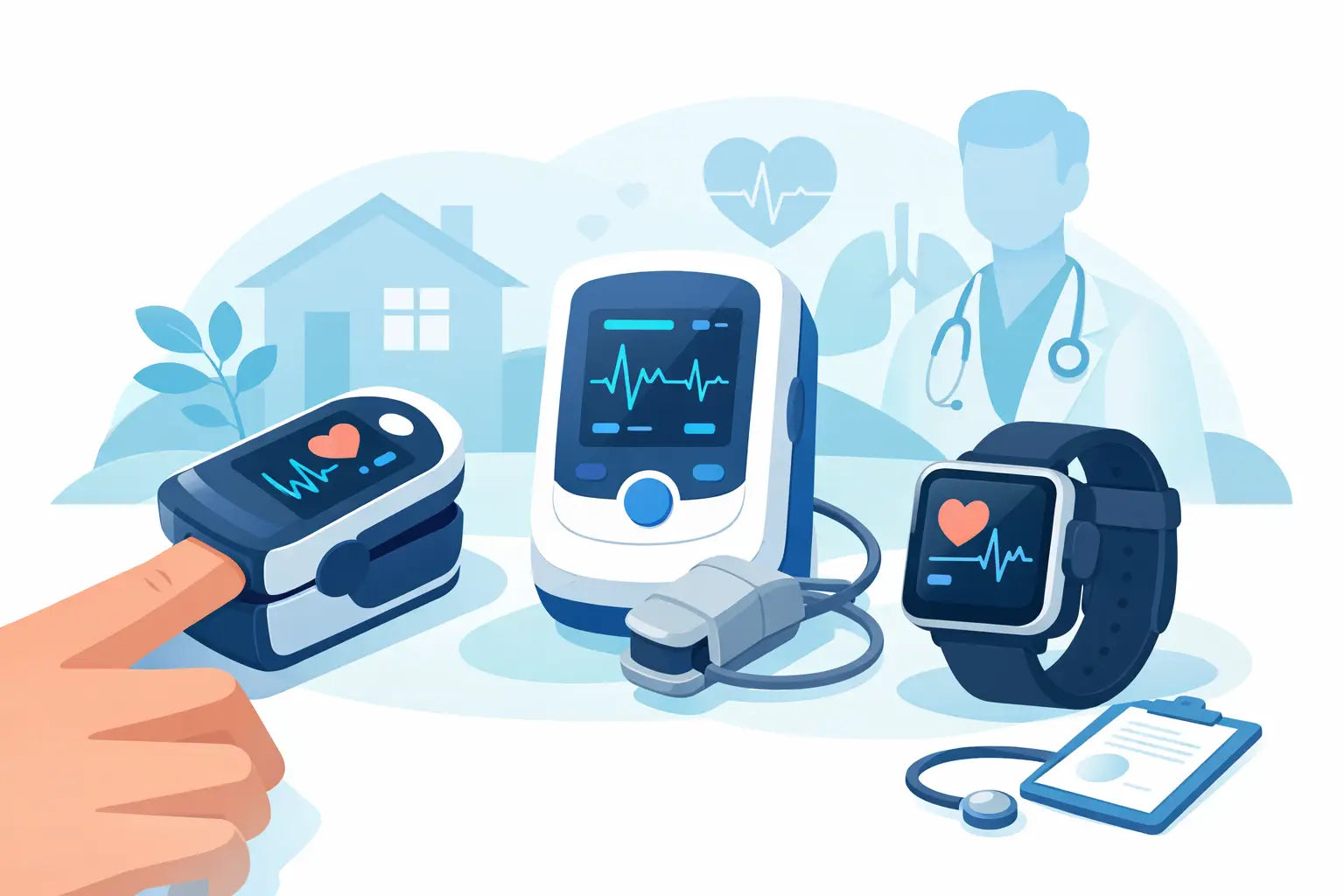
A pulse oximeter can turn a quick fingertip check into useful information for a caregiver, a patient managing a respiratory condition, or a busy clinical team. The best pulse oximeters are not necessarily the ones with the longest feature list. They are the ones that provide a readable, repeatable oxygen saturation and pulse-rate measurement when you need it, fit the person using them, and suit the care setting.
For home monitoring, a simple fingertip model is often the practical choice. For a clinic, repeated patient checks may justify a more durable unit with a brighter display, accessories, or a different sensor style. Choosing well starts with understanding what the device measures and what it cannot tell you.
What a pulse oximeter measures
A pulse oximeter estimates blood oxygen saturation, commonly shown as SpO2, along with pulse rate. Most fingertip models use light passing through the finger to estimate how much oxygen is carried by hemoglobin in the blood. The display may also show a pulse bar, waveform, or perfusion indicator that helps indicate whether the device is getting a usable signal.
This measurement can be helpful for people with certain lung or heart conditions, those recovering from illness, and caregivers following a clinician's home-monitoring instructions. It can also be useful in medical offices, therapy settings, and first-aid supplies where a quick screening measurement is needed.
A pulse oximeter does not diagnose the cause of shortness of breath, chest discomfort, fatigue, or a low reading. It also cannot replace a medical assessment. Use it as one piece of information alongside symptoms, prescribed care plans, and guidance from a healthcare provider.
How to choose the best pulse oximeters
The right device depends on who will use it, how often it will be used, and whether readings will guide a clinician-directed care plan. Start with the basics: dependable performance, a comfortable sensor, and a display that the intended user can read without assistance.
Look for appropriate accuracy and product labeling
For medical monitoring, look closely at the manufacturer's stated accuracy range for SpO2 and pulse rate. Oxygen readings are generally described as an estimate within a stated range rather than an exact laboratory measurement. A device intended to support medical decisions should have the appropriate FDA clearance or authorization for its labeled use, rather than being marketed only as a general wellness product.
Be cautious with unusually low-priced devices that provide few specifications, no instructions, or unclear claims. A dependable monitor should identify its intended use, operating instructions, measurement range, battery requirements, and care guidance. For clinics and care providers, keeping product documentation available also makes staff training and inventory management easier.
Choose a display that works in real conditions
A bright, high-contrast display makes a meaningful difference for seniors, caregivers, and clinical staff. Large numbers are easier to check during a nighttime oxygen check or in a room with limited lighting. An auto-rotating screen can be especially helpful because it allows the person taking the reading to see the result from either side of the hand.
Extra display details can be useful, but they should serve a purpose. A pulse waveform or signal-strength indicator may help users recognize when the reading is still stabilizing. For many home users, however, a clear SpO2 value, pulse rate, and low-battery alert are more valuable than a complicated screen.
Prioritize fit and sensor type
Standard fingertip pulse oximeters work well for many adults, but finger size, hand circulation, arthritis, and movement can affect comfort and signal quality. A soft interior cushion and a spring that opens easily can make routine use much less frustrating. If the device will be used by a child, select a pediatric model designed for smaller fingers rather than assuming an adult clip will provide a reliable fit.
Some professional settings may need a handheld monitor with a separate sensor. These units can offer more flexibility for repeated checks, patients who cannot comfortably use a fingertip clip, or care teams needing a particular probe style. They cost more and require additional upkeep, so they are usually best for a specific clinical need rather than casual home use.
Consider daily practicality
Battery-powered fingertip units are convenient because they travel easily and do not need a charging cable during use. Check whether the model uses common replaceable batteries, whether batteries are included, and whether it shuts off automatically after a reading. A protective case and lanyard are useful for travel, home visits, and keeping the device together with other respiratory-care supplies.
Durability matters more when the oximeter will move between exam rooms, be used by several staff members, or stay in a family first-aid kit. Look for a unit that can be cleaned according to its instructions and stored safely between uses. Do not use harsh cleaners or immerse the device unless the manufacturer specifically says it is designed for that.
Match the oximeter to the care setting
For most adults checking oxygen levels at home, a straightforward fingertip pulse oximeter with large numbers, simple controls, and automatic shutoff is usually enough. It should be easy to place on the same finger each time and simple enough that another family member can use it if needed.
For caregivers, readability and repeatability deserve extra attention. A device that stores readings may help with a clinician-directed monitoring plan, but manual notes can work just as well. Record the date, time, reading, pulse rate, oxygen use if applicable, activity level, and any symptoms. A single number without context is less helpful than a clear pattern.
For clinics and professional practices, consider volume and workflow. A reusable device may need a cleanable exterior, dependable battery management, replacement sensors, and an assigned storage location. Staff should know how to obtain a stable reading, document it correctly, and escalate concerns according to office policy.
How to get a more reliable reading
Even the best pulse oximeter can give a poor result when the sensor is used under the wrong conditions. Sit still and rest your hand on a stable surface. Warm cold hands before testing, remove dark nail polish or artificial nails when possible, and place the device fully over the fingertip. Keep the hand relaxed and avoid talking, walking, or shaking the finger while the unit is measuring.
Wait for the numbers to settle instead of recording the first value that appears. If a reading seems unexpected, repeat it after a few minutes using a different finger. Poor circulation, movement, bright external light, skin temperature, nail products, and some medical conditions can affect performance. If readings repeatedly conflict with how the person feels, contact a healthcare provider rather than relying on repeated home checks alone.
Pulse oximeters also have known limitations across different skin tones and in certain low-oxygen ranges. This does not make the device useless, but it reinforces why symptoms and clinical judgment matter. A person who is struggling to breathe needs attention even if a single monitor reading does not appear alarming.
Know when a number needs medical attention
A normal oxygen saturation range varies by person and condition. Some people with chronic lung disease may have a provider-established target that is lower than what is typical for other adults. Follow the care plan given by the prescribing clinician, especially for anyone using supplemental oxygen.
Seek urgent medical guidance for a reading that is lower than the person's prescribed range, keeps falling, or is accompanied by worsening shortness of breath, chest pain, bluish lips or face, confusion, fainting, or severe sleepiness. If someone has severe trouble breathing, becomes unresponsive, or shows other emergency symptoms, call 911. Do not delay emergency care while trying to improve or repeatedly confirm a reading.
Buy for confidence, not just features
A pulse oximeter should make oxygen checks easier, not create confusion. Choose a model with clear labeling, a comfortable fit, and features that match the user's real needs. US MedResources helps home users and healthcare practices source practical monitoring and respiratory-care supplies with direct delivery. Keep the device accessible, read the instructions before the first use, and make sure everyone involved in care knows what the readings mean for that individual.