Call Us -
Cart
0
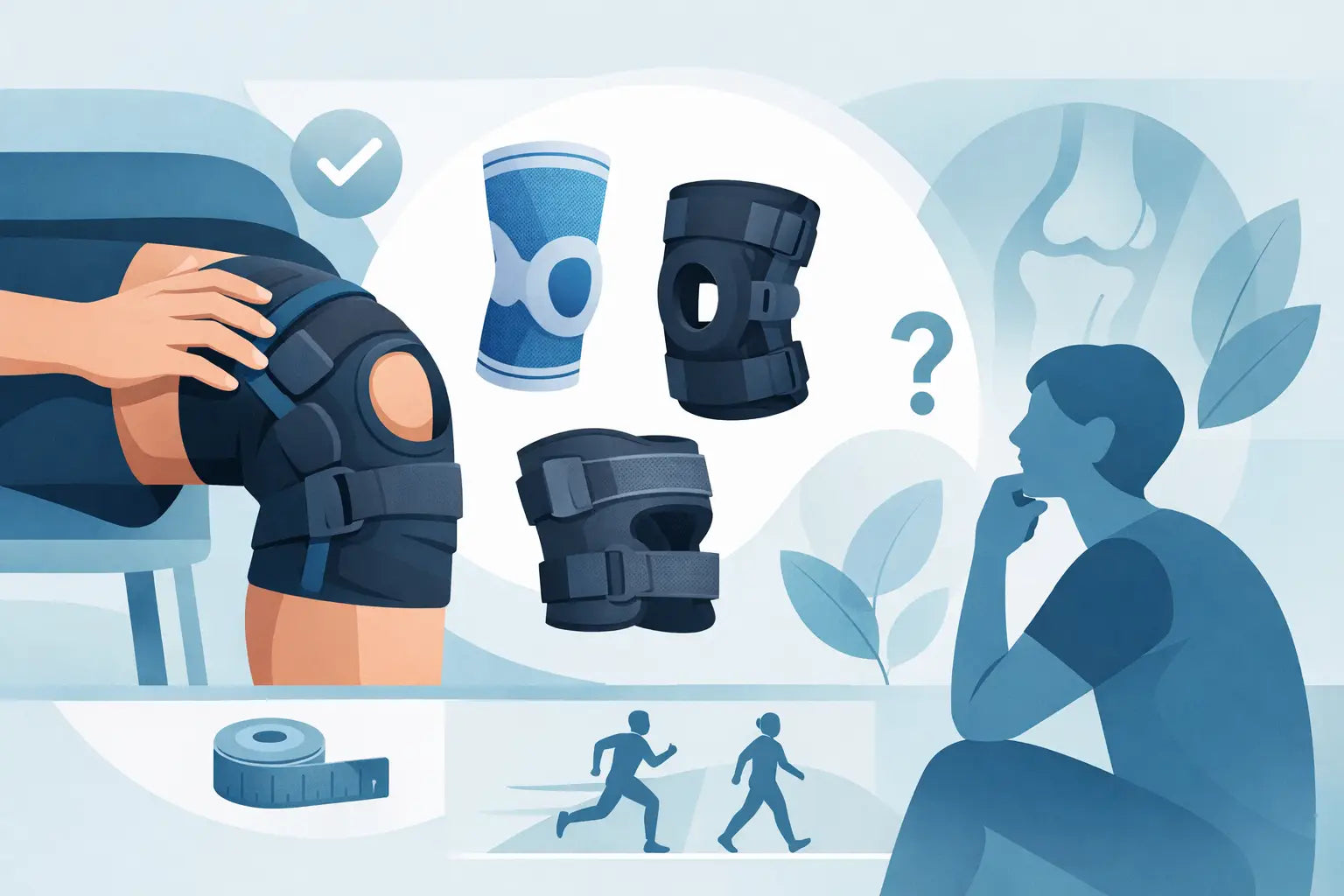
A knee that feels unstable can change everything fast - walking the dog, climbing stairs, getting out of a car, even standing at the kitchen counter. If you are trying to figure out how to choose a knee brace, the right starting point is not the product page. It is understanding what kind of support your knee actually needs.
A brace can help with compression, alignment, stability, and confidence during movement. But not every brace is built for the same job. A sleeve that feels great for mild swelling may do very little for ligament instability, and a heavy hinged brace can be more than you need for everyday aches. Choosing well means matching the brace to the problem, the activity level, and the fit.
How to choose a knee brace by symptom and goal
The fastest way to narrow your options is to ask one simple question: what are you trying to fix or support? Most people shop by product style first, but symptom and use case are usually more helpful.
If your knee feels mildly sore, stiff, or swollen after activity, a compression sleeve is often the first category to consider. These are light, flexible, and easy to wear under clothing. They can help with warmth, mild swelling, and general support, especially for arthritis, overuse discomfort, or daily movement.
If your kneecap feels like it tracks poorly, shifts, or hurts at the front of the knee, a patella-focused brace may make more sense. These designs often include an open patella, buttress, or stabilizing ring to help guide the kneecap and reduce pressure in a specific area.
If the knee feels wobbly, gives out, or you are recovering from a sprain, meniscus issue, or ligament injury, you may need more structure. Hinged braces add side support and are commonly used when stability matters more than low-profile comfort.
If you are returning to sports or more demanding activity, the decision gets more specific. Some braces are made for light walking and errands. Others are designed to stay secure during repetitive motion, lateral movement, or longer periods of wear. In these cases, bulk, range of motion, and strap design matter just as much as support level.
Common knee brace types and what they do
Understanding the main categories can save time and prevent overbuying.
Compression sleeves
These are best for mild support, warmth, and swelling control. They are usually the easiest to put on and the least noticeable under pants. They work well for arthritis, mild soreness, and everyday activity, but they do not offer serious protection against instability.
Wraparound braces
These braces open fully and secure with straps or hook-and-loop closures. They are often easier for seniors, caregivers, or anyone who has trouble pulling a sleeve over the foot and up the leg. They can offer moderate support and easier adjustability throughout the day.
Hinged knee braces
These are used when side-to-side stability is a concern. Hinges help control motion and may be appropriate for ligament injuries, moderate instability, or certain phases of recovery. They tend to be bulkier, so the trade-off is better support for less convenience under clothing.
Patella stabilization braces
These focus on kneecap alignment and front-of-knee pain. They are often a good option for patellar tracking issues or discomfort during stairs, squatting, or prolonged sitting. They are more targeted than a basic sleeve, but less restrictive than a full rigid brace.
Immobilizers and post-op braces
These are designed to significantly limit movement. They are usually used under direct medical guidance after surgery or acute injury. For most shoppers, this is not a self-select category unless a physician or therapist has already given instructions.
Fit matters as much as brace style
Even a well-made brace will not help much if it slides down, pinches, rolls, or feels so uncomfortable that you stop wearing it. This is where many buyers get stuck. They choose the right category, but the wrong size or shape.
Start with the manufacturer sizing chart for the exact brace you are considering. Do not assume you wear the same size across all brands or brace styles. Most knee braces size by measurements taken above and below the kneecap, and some also use calf or thigh circumference. Measure with a soft tape measure and follow the product instructions closely.
A brace should feel secure, but it should not cut into the skin, leave deep marks, or create numbness. If it bunches behind the knee, it may be too long, too loose, or simply the wrong design for your leg shape. If it slides during walking, you may need a different size or a brace with straps instead of a pull-on sleeve.
For patients with swelling that changes during the day, a wraparound option can be especially practical. It allows for adjustment without removing shoes or fully undressing. For clinical staff and caregivers, that can make routine support much easier.
How to choose a knee brace for arthritis, injury, or exercise
The phrase how to choose a knee brace sounds simple, but the answer changes based on why you need one.
For arthritis, many people do well with light-to-moderate compression and warmth. The goal is often reducing discomfort during normal movement rather than locking the joint down. A low-profile sleeve or wrap can be enough if the issue is stiffness and mild swelling.
For injury recovery, more structure may be necessary. If there is instability, prior ligament damage, or a meniscus problem, a hinged design may offer more confidence and control. Recovery is also one area where timing matters. What works in week one may not be the same brace you want later when movement increases.
For exercise, think about motion first. A brace for walking on a treadmill may be different from one for pickleball, tennis, lifting, or job-related kneeling. More support is not always better. A bulky brace can interfere with movement, overheat the leg, or feel cumbersome during longer use. On the other hand, a minimal sleeve may not be enough if the knee gives way during side-to-side activity.
When to ask a medical professional before buying
Some knee pain is straightforward. Some is not. If the knee locks, buckles, swells significantly, looks deformed, or the pain started after a fall or twisting injury, it is smart to get medical input before choosing a brace on your own.
The same goes for post-surgical recovery, suspected ligament tears, or recurring instability. In those cases, a brace may be part of the solution, but it should not replace an exam. A clinician can also help determine whether you need compression, unloading, hinged support, or temporary immobilization.
For providers purchasing for patients, this is where matching the brace to the treatment plan becomes especially important. Ease of application, adherence, mobility goals, and skin tolerance can all affect product success.
Small details that make daily use easier
Material, closure type, and wear environment all matter more than people expect. If the brace will be worn for hours, breathable fabric can make a big difference. If hand strength is limited, simpler closures may be easier than tight pull-on designs. If the brace needs to fit under work clothes, a slim profile may matter more than maximum support.
It is also worth considering whether you will wear the brace occasionally or every day. For daily use, comfort and washability are not minor features. They are part of whether the product will actually be used consistently.
At US MedResources, we know many customers are balancing pain relief, recovery, and convenience all at once. The best brace is usually the one that matches the condition, fits correctly, and is practical enough to wear when you need it.
A good knee brace should make movement feel more manageable, not more complicated. If you start with the purpose, check sizing carefully, and stay honest about the level of support you need, you are much more likely to choose a brace that helps from day one.