Call Us -
Cart
0
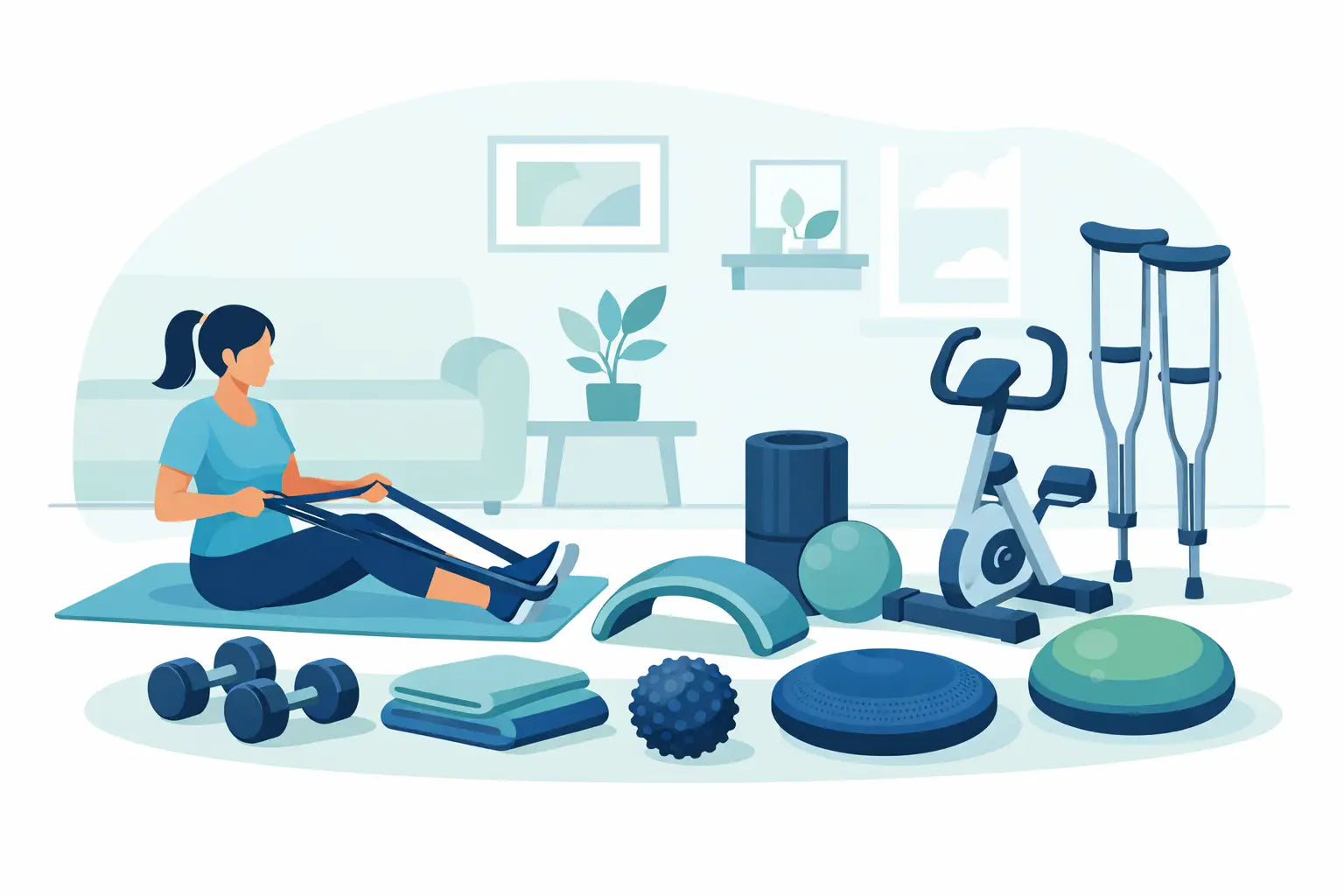
A recovery plan usually looks simple on paper until you try to do it in your living room. A therapist may recommend stretches, balance work, resistance training, or pain relief tools, but the real difference often comes down to having the right physical therapy equipment for home use close by and ready when you need it. When equipment fits your condition, your space, and your routine, home exercise becomes easier to follow and more effective over time.
For some people, that means rebuilding strength after surgery. For others, it means improving mobility, managing chronic pain, or keeping progress going between clinic visits. The best setup is not always the biggest or most expensive. It is the one you will actually use consistently and safely.
What physical therapy equipment for home should do
Home therapy equipment should support a clear goal. That goal might be increasing range of motion, improving balance, restoring grip strength, reducing stiffness, or making daily movement less painful. If a product does not connect to one of those needs, it can quickly become something that sits in a closet.
That is why basic, versatile tools often matter most. Resistance bands, exercise balls, therapy putty, hand exercisers, foam rollers, pedal exercisers, and hot or cold therapy products all serve different purposes, but each can fit into a real treatment plan. Some are better for gentle recovery. Others are more useful once a patient is ready to rebuild endurance and strength.
The key is matching the equipment to the stage of recovery. Early-stage rehab often calls for low-impact, supportive products. Later stages may require more resistance, more repetition, or a greater focus on coordination and stability.
The most useful categories of physical therapy equipment for home
If you are shopping for yourself, a family member, or a patient care setup, it helps to think in categories instead of individual items first.
Strength and resistance tools
Resistance bands are one of the most practical choices for home therapy. They are compact, affordable, and useful for upper body, lower body, and core exercises. They also come in different resistance levels, which makes it easier to progress without changing your whole setup.
Hand weights and ankle weights can also be helpful, but they are not right for every recovery plan. After surgery or injury, too much weight too soon can aggravate symptoms rather than improve them. In many cases, bands or light resistance tools are the better starting point.
Therapy putty and hand exercisers are especially useful for grip, finger, and wrist rehabilitation. These products are often recommended after hand injuries, strokes, or orthopedic procedures where fine motor strength needs attention.
Balance and stability equipment
Balance pads, wobble boards, and stability trainers are commonly used when fall prevention, ankle stability, or post-injury coordination is part of the plan. These tools can be effective, but they require extra care at home. Someone with poor balance or lower-body weakness may need supervision or a stable support surface nearby.
Exercise balls can also help with core work, seated stability, and certain flexibility exercises. The trade-off is space. They are useful, but not always ideal for smaller homes or users who need something easier to store.
Mobility and range-of-motion aids
Stretch straps, shoulder pulleys, and pedal exercisers can make a big difference for people working on flexibility and joint movement. These are often used after joint replacement, shoulder injuries, or periods of limited activity.
A pedal exerciser is especially practical for home use because it allows seated movement for the arms or legs without requiring full gym equipment. For seniors or patients with limited endurance, this can be a manageable way to stay active without putting too much stress on the body.
Recovery and pain-relief products
Hot and cold therapy products are often part of home rehab because they help manage swelling, soreness, and stiffness. Cold therapy can be useful after exercise or during flare-ups, while heat is often better for muscle tightness and general discomfort. The right choice depends on the condition and the instructions from a healthcare provider.
Foam rollers and massage tools may also help reduce muscle tension, but they are not appropriate for every person or injury. Someone recovering from surgery or dealing with acute inflammation may need to avoid aggressive pressure. This is one of those areas where more is not always better.
How to choose home equipment based on the condition
The most effective physical therapy equipment for home use depends on what the body is trying to recover from.
For post-surgical recovery, simple equipment usually works best. Stretch bands, ice packs, mobility aids, and range-of-motion tools are often more useful than advanced exercise devices. The priority is controlled movement and safe progression, not intensity.
For arthritis or chronic joint pain, low-impact tools tend to be the better fit. Heat therapy products, pedal exercisers, hand therapy items, and supportive cushions can help maintain comfort while encouraging regular movement.
For neurologic recovery or balance concerns, safety matters as much as function. Stable support tools, gait aids, balance products, and supervised exercise equipment may all have a role, but the home environment needs to be considered carefully.
For sports injuries or more advanced strengthening, users may benefit from resistance systems, recovery rollers, stretching tools, and targeted support braces. Even then, progress should be measured. Pushing too hard too fast can delay recovery.
What caregivers and clinicians should look for
Caregivers often shop with a different set of priorities than patients do. Ease of use, storage, safety, and clear product purpose matter more than novelty. If an item is difficult to set up or confusing to use, it is less likely to support daily compliance.
Clinicians and practice buyers may also be looking for equipment that works both in clinic and in a patient home program. In that case, consistency matters. Using similar tools across care settings can make instructions easier to follow and improve patient confidence once they continue exercises at home.
This is where a dependable medical supply source becomes valuable. Broad selection matters, but so does having practical options for different acuity levels, different budgets, and both professional and home users. US MedResources serves that need by offering products that support both provider purchasing and direct-to-door home care access.
Common mistakes when buying home therapy equipment
One common mistake is buying too much at once. A full cart does not create a better rehab plan. In many cases, two or three well-chosen items are more useful than a large collection of equipment that never gets used.
Another mistake is choosing products based on general fitness goals instead of medical needs. Rehab equipment is not the same as workout equipment. Some overlap exists, but recovery usually requires more control, more support, and more attention to pain, fatigue, and movement quality.
It is also easy to overestimate available space. Larger items may sound appealing, but if they are hard to move or store, they quickly become inconvenient. Home-based care works best when equipment fits into daily life without creating extra obstacles.
Finally, safety should never be treated as an afterthought. Non-slip surfaces, manageable resistance levels, and easy-to-understand use instructions all matter, especially for seniors and anyone with balance limitations or recent surgery.
Building a practical home therapy setup
A good home setup does not need to feel clinical. It just needs to support regular use. For many households, that means starting with a small group of essentials: a resistance band set, a stretch strap, a hot or cold therapy option, and one or two targeted tools based on the specific condition.
From there, equipment can expand as needs change. Someone recovering knee strength may later add ankle weights or a balance pad. A person working on hand recovery may progress from soft therapy putty to firmer resistance tools. The setup should grow with the treatment plan, not ahead of it.
This approach also helps control cost. Instead of purchasing equipment that may never be needed, buyers can focus on products that solve a current problem and support the next step in recovery.
When home equipment makes the biggest difference
Home therapy equipment is most valuable when it removes friction from care. If a patient can complete exercises without waiting for an appointment, if a caregiver can support daily movement more easily, or if a provider can recommend practical tools that patients will actually use, the equipment is doing its job.
That does not mean every product belongs in every home. Some people need simple support. Others need a more structured rehab setup. What matters is choosing equipment that matches the condition, the user, and the home environment.
A smart purchase should make recovery feel more manageable, not more complicated. When the right tools are delivered directly to your door and ready for regular use, staying on track becomes a lot more realistic.