Call Us -
Cart
0
A small cut can often be managed with basic first aid. A surgical incision, pressure injury, diabetic foot wound, or deep skin tear needs a more deliberate plan. If you are asking what supplies help with wound healing, start with supplies that clean the wound gently, protect it from friction and bacteria, manage drainage, and keep the surrounding skin in good condition.
The right dressing is not always the most absorbent or the most expensive one. It depends on the wound’s depth, location, amount of drainage, and whether a clinician has given specific instructions. For home caregivers and clinical teams, having the right wound care supplies ready can make dressing changes cleaner, more comfortable, and easier to complete on schedule.
What Supplies Help With Wound Healing?
Most uncomplicated wounds benefit from a simple system: cleanse, cover, secure, and monitor. Your supplies should support each part of that process without irritating healing tissue.
Gentle wound cleansers and saline
Normal saline wound wash is a practical first choice for rinsing away loose debris and old drainage. It is gentle on healing tissue and easy to use during routine dressing changes. Clean running water may be appropriate for minor cuts and scrapes when saline is not available, but follow discharge instructions for surgical wounds or more serious injuries.
Avoid repeatedly pouring hydrogen peroxide, rubbing alcohol, or iodine directly into an open wound unless a healthcare professional specifically directs you to use it. These products can be useful in certain situations, but frequent use may damage healthy cells and slow healing. For everyday home wound care, gentle cleansing is usually the better approach.
Non-adherent contact layers
A non-adherent pad or dressing is designed not to stick tightly to the wound bed. This can reduce pain and protect fragile new tissue when the dressing is removed. These supplies are especially useful for abrasions, skin tears, burns, and shallow wounds that may otherwise stick to plain dry gauze.
Some wounds need a moist healing environment rather than a dry covering. Hydrogel dressings can add moisture to dry wounds, while hydrocolloid dressings may help protect low-to-moderately draining superficial wounds. These products are not interchangeable. A wound that is heavily draining, infected, or surrounded by fragile skin may need a different dressing plan.
Absorbent dressings for drainage
Drainage, also called exudate, is a key factor when choosing supplies. Sterile gauze pads are versatile and can be layered for minor-to-moderate drainage. Foam dressings generally offer more absorption and cushioning, making them useful where pressure, rubbing, or ongoing drainage is a concern.
For heavily draining wounds, clinicians may recommend more specialized absorbent dressings, such as alginate or hydrofiber. These can handle higher fluid levels, but they should be selected with the wound’s condition in mind. A dressing that dries out a wound too much can be uncomfortable, while one that cannot manage drainage can leave the surrounding skin pale, soggy, and more likely to break down.
Tape, wraps, and other securement supplies
A good dressing only works if it stays in place. Medical tape, transparent film, stretch gauze rolls, and self-adherent wraps can all secure a cover dressing. The best choice depends on the body area and the person’s skin.
Paper tape is often gentler for sensitive or fragile skin. Silicone tape can be a helpful option for people who need frequent dressing changes and experience skin irritation from adhesives. On arms or legs, a gauze roll or self-adherent wrap may hold a dressing in place without placing adhesive directly on vulnerable skin. Do not apply wraps too tightly. Numbness, tingling, increased pain, cool skin, or a change in color below the wrap requires immediate attention.
Build a Practical Wound Care Kit
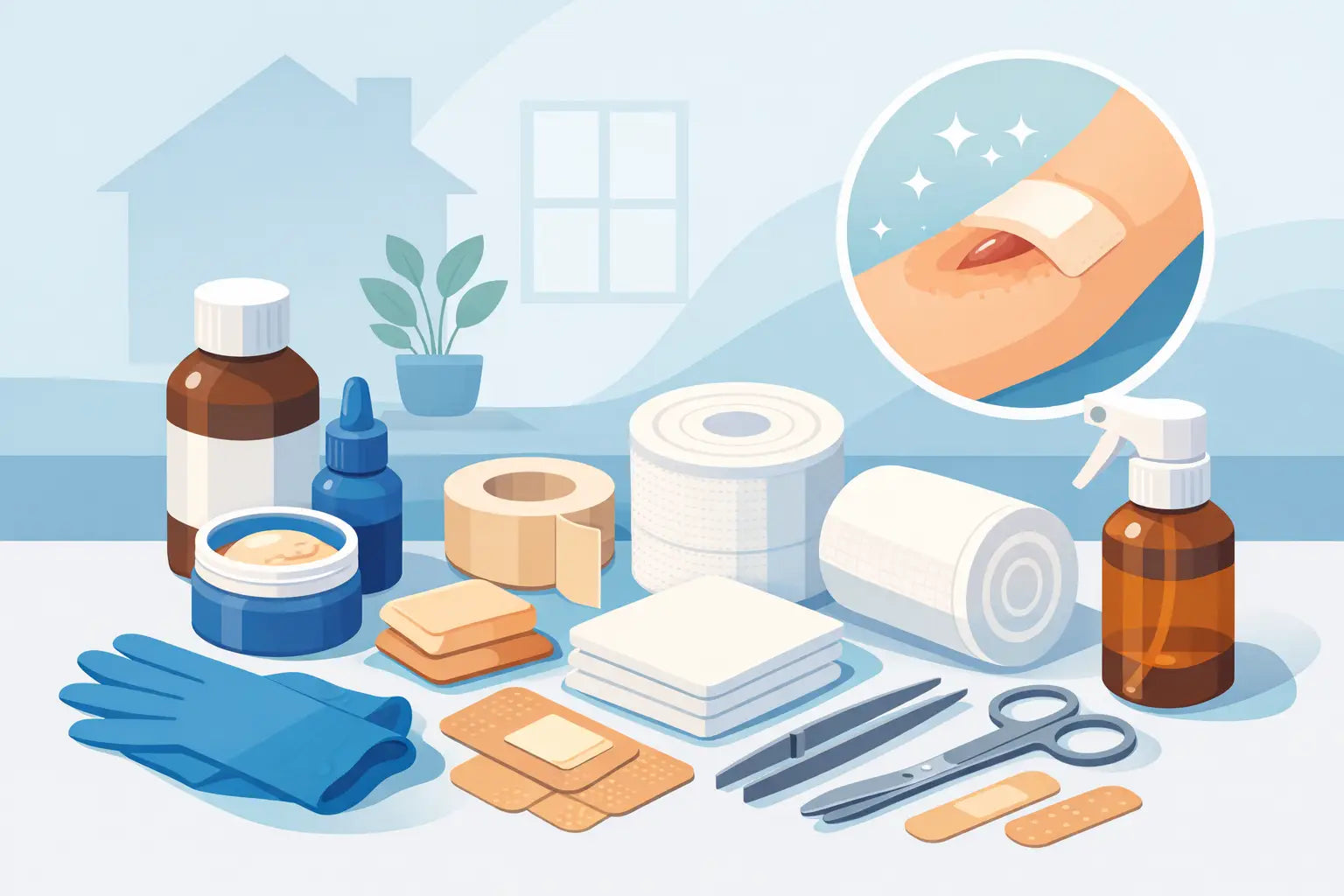
A well-stocked kit saves time when a dressing becomes wet, dirty, or loose. Keep supplies in a clean, dry area and check expiration dates on sterile products. For most households and care settings, a useful wound care kit includes:
- Saline wound wash or sterile saline packets for cleansing
- Disposable medical gloves and hand sanitizer
- Sterile gauze pads in more than one size
- Non-adherent pads for wounds that may stick to gauze
- Medical tape, gauze rolls, or self-adherent wrap
- Foam or other absorbent dressings when recommended
- Clean scissors, if needed, used only for medical supplies
- A small disposable bag for used dressings and gloves
Protect the Skin Around the Wound
Healthy surrounding skin is part of wound healing. Drainage, adhesives, frequent washing, and friction can weaken the skin around a wound even when the wound itself appears stable. A skin barrier film or protective wipe may help shield intact skin from moisture and adhesive trauma. Barrier creams can also be useful for moisture-related skin irritation, though they should generally not be applied inside an open wound unless directed by a clinician.
For pressure-related wounds, supplies alone are not enough. Pressure redistribution is essential. Cushions, positioning aids, heel protectors, and regular repositioning can reduce pressure on vulnerable areas. A dressing may protect the skin, but it cannot overcome continued pressure from sitting or lying in one position for too long.
People with diabetes should take extra care with foot wounds. Even a small blister, crack, or cut can become serious when circulation or sensation is reduced. Keep the area clean and protected, avoid walking barefoot, and contact a healthcare provider early instead of trying to manage a worsening foot wound with over-the-counter supplies alone.
Clean Technique Matters at Home
You do not need a clinic-style sterile field for every minor wound, but clean technique matters. Wash your hands before and after a dressing change. Put on disposable gloves when handling drainage or an open wound. Set supplies on a clean surface, remove the old dressing carefully, and dispose of it before opening new materials.
Clean from the wound outward rather than wiping from surrounding skin back into the wound. Use a fresh gauze pad for each pass when needed. Pat the surrounding skin dry, apply the recommended dressing, and secure it without pulling or stretching the skin.
Changing dressings too often can disturb new tissue. Leaving a saturated or soiled dressing in place can increase irritation and infection risk. The right schedule depends on drainage and the dressing type. Many dressings should be changed when wet, loose, contaminated, or as instructed by the treating provider.
When Wound Care Supplies Are Not Enough
Home supplies support healing, but they do not replace medical evaluation. Contact a healthcare provider promptly for increasing redness, warmth, swelling, pain, pus-like drainage, a foul odor, fever, red streaks, or wound edges that are opening. Seek urgent care for uncontrolled bleeding, deep punctures, bites, burns larger than the palm of the hand, wounds with exposed tissue, or injuries caused by a dirty or rusty object.
A wound that is not improving after several days, keeps reopening, or shows new drainage should also be assessed. This is particularly important for people with diabetes, poor circulation, immune suppression, neuropathy, or a history of pressure injuries. A clinician may need to check for infection, remove damaged tissue, adjust medications, or prescribe a more advanced dressing.
The most helpful wound care supply is the one that matches the wound and can be used correctly every time. Keep core supplies on hand, follow clinical instructions when they are provided, and replace items before you run out. US MedResources helps make dependable wound care and home health supplies easier to keep within reach, so you can be prepared for routine care and ready to respond when a provider recommends a specific product.