Call Us -
Cart
0
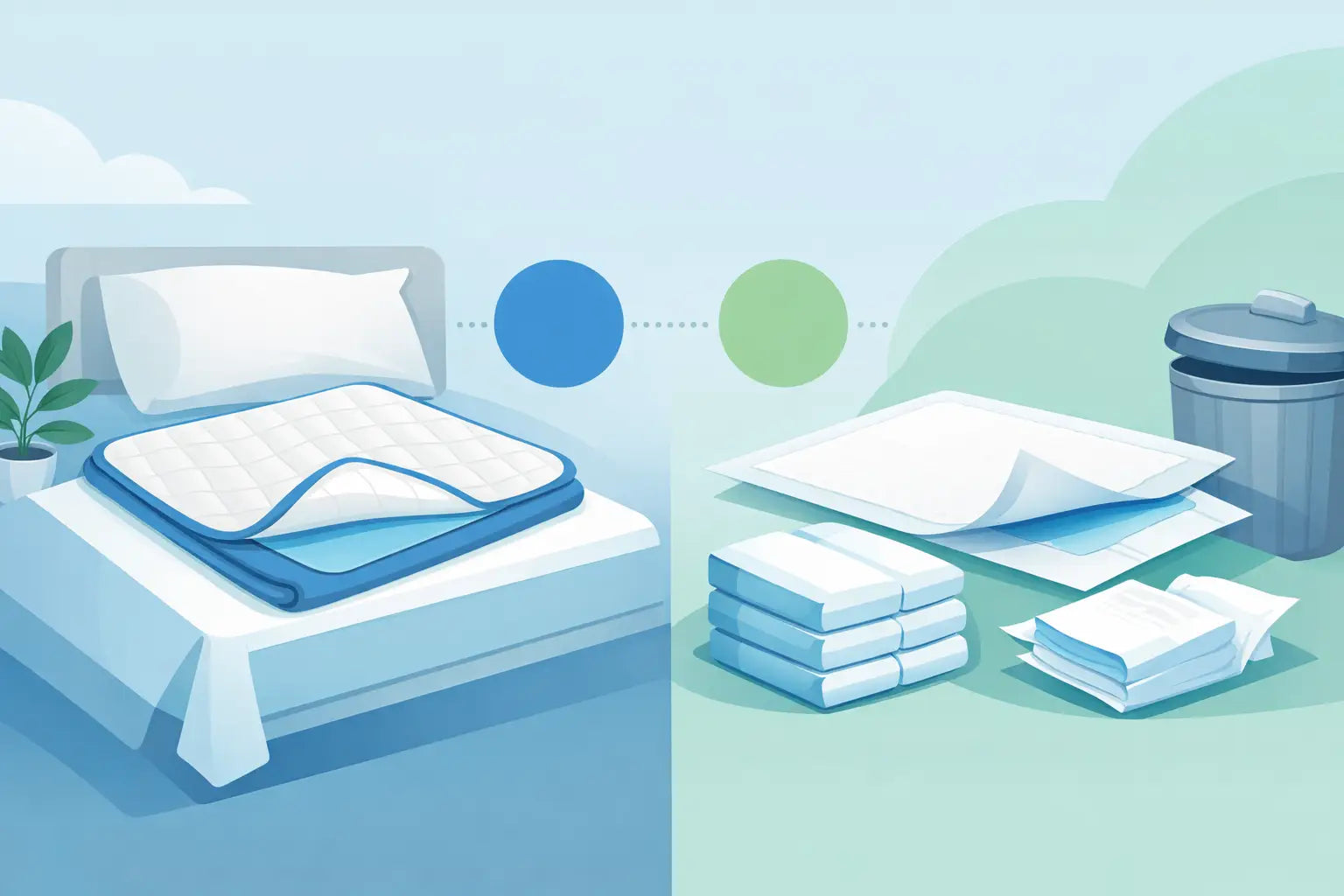
A wet bed, chair, or wheelchair cushion creates more than extra laundry. It can interrupt sleep, complicate caregiving, and leave skin exposed to moisture. When comparing reusable underpads vs disposable options, the best choice depends on how often protection is needed, where it will be used, and who is handling cleanup.
Underpads, sometimes called chux pads or bed pads, add a protective layer over mattresses, furniture, exam tables, and seating. Both types can support continence care, post-surgical recovery, overnight protection, wound drainage management when clinically appropriate, and everyday caregiving. Their advantages are different, so choosing by price alone can lead to the wrong fit.
Reusable Underpads vs Disposable: The Main Difference
Disposable underpads are single-use pads with an absorbent core and a moisture-resistant backing. After use, they are folded and discarded. They are designed for convenience, especially when laundry access is limited or contamination control is a priority.
Reusable underpads are washable textile pads, typically made with a soft top layer, absorbent inner material, and waterproof backing. They can be washed and dried repeatedly according to the product instructions. Their value comes from repeated use rather than immediate disposal.
Neither type is automatically better. A caregiver managing occasional nighttime leakage may prefer a washable pad that stays in place and feels more like fabric. A clinic turning over exam rooms or a family dealing with a stomach illness may need the fast cleanup of disposables.
| Consideration | Reusable underpads | Disposable underpads |
|---|---|---|
| Best for | Ongoing, predictable protection | Travel, short-term needs, and quick changes |
| Cleanup | Requires laundering | Discard after use |
| Up-front cost | Usually higher per pad | Usually lower per pad |
| Long-term cost | Can be lower with frequent reuse | Continues with every change |
| Feel | Often softer and less paper-like | Varies by brand and absorbency |
| Storage | Fewer pads needed, plus laundry space | Requires storage for multiple packages |
When Reusable Underpads Make Sense
Reusable pads are often a practical choice when protection is needed day after day. They work well for a bed, favorite recliner, couch, or wheelchair where the same surface needs regular coverage. A caregiver can keep several on hand and rotate them through the wash.
The long-term cost can be easier to manage for frequent use. Although a reusable pad generally costs more at the time of purchase, its cost is spread across many wash cycles. This is most meaningful when pads are changed regularly and the household already runs frequent loads of laundry.
Comfort matters, too. Many reusable pads have a softer, quilted surface that may be more comfortable for extended sitting or sleeping. A pad that is uncomfortable, noisy, or prone to bunching is less likely to be used consistently.
There are trade-offs. Reusables must be washed promptly, dried thoroughly, and replaced once the waterproof layer or absorbency begins to break down. They may not be the best choice when a caregiver has limited laundry capacity, when a person is away from home, or when there is a high volume of soiling that makes constant washing impractical.
What to Check Before Buying Reusable Pads
Look at the pad dimensions first. A small pad may protect a chair seat, but it may not provide enough coverage for a full-size bed. Also check whether the pad is intended for light leakage, moderate incontinence, or heavier overnight use. Larger is not always more absorbent, so product specifications matter.
Pay attention to the backing and edge design. A waterproof barrier helps prevent moisture from reaching the surface below, while a non-slip backing can help reduce shifting on some chairs and bedding. No underpad should be relied on to eliminate all movement, particularly on slick surfaces. Follow washing and drying instructions closely, since excessive heat or bleach can shorten the life of some materials.
When Disposable Underpads Are the Better Choice
Disposable underpads are built for speed. Place one on the surface, use it as needed, and discard it after soiling. For caregivers assisting with frequent changes, that can reduce the time spent handling wet laundry and remaking a bed.
They are especially useful for travel, hospital discharge, temporary recovery, outpatient procedures, guest use, and situations where a washing machine is not readily available. Keeping a package in the car, travel bag, or emergency supply area can prevent a small accident from becoming a difficult cleanup.
Disposable options can also support cleaner room turnover in professional settings. A clinic, therapy practice, or home health provider may prefer fresh, single-use coverage for exam tables and treatment surfaces when appropriate for the care task. Select a size that covers the intended area without creating excess material that can fold or shift.
The ongoing expense is the main consideration. One pad may be inexpensive, but frequent changes add up over weeks and months. Storage is another factor. Larger packages are convenient, yet they take up space and need to be kept dry and accessible.
Absorbency Is Not One-Size-Fits-All
A thin disposable pad may be enough for minor drips or short appointments. It may be inadequate for a full night of heavy leakage. For higher-volume needs, choose a pad described for greater absorbency and use it with a broader continence plan when needed.
Underpads protect surfaces. They are not a substitute for absorbent briefs, protective underwear, scheduled toileting, skin cleansing, or medical guidance. If leakage is new, suddenly worse, associated with pain or fever, or causing skin breakdown, contact a healthcare professional.
How to Choose for Home Care, Recovery, or Clinical Use
Start with the care routine, not the product label. Ask how many changes are likely in 24 hours, whether laundry is available, and which surface needs protection. A person who uses one chair each afternoon has a very different need than someone with overnight incontinence and frequent bed changes.
For ongoing home use, many families find that a combination works best. Reusable underpads can provide dependable coverage on the bed or chair each day, while disposable pads are reserved for travel, visitors, illness, or times when laundry falls behind. This approach gives caregivers flexibility without relying exclusively on one format.
For recovery after surgery or a procedure, consider the expected duration. A few days of drainage concerns or limited mobility may call for disposable pads because cleanup is easier during a demanding period. For longer-term mobility or continence support, reusable pads may offer better everyday value.
Healthcare practices should also consider workflow. Disposable pads can simplify patient-to-patient changes and reduce laundry handling. Reusable options may suit nonclinical seating, staff areas, or applications where a facility has established laundering procedures. Follow facility infection-control policies and any product-specific instructions.
Use Underpads Safely and Effectively
Place the absorbent side facing up and the moisture barrier facing down. Smooth the pad flat to reduce wrinkles, which can be uncomfortable and may increase friction for people who spend long periods in bed or seated. Cover the area most likely to need protection, but do not let excess material create a bunching hazard.
Check the pad regularly and change it promptly after it becomes wet or soiled. Prolonged exposure to moisture can irritate skin and raise the risk of skin damage, especially for older adults, people with limited mobility, and people with diabetes. Gentle cleansing, complete drying, and appropriate skin protection are just as important as keeping the mattress dry.
For a bed, consider using the underpad as one layer in a practical setup: mattress protector, fitted sheet, underpad, and any needed continence product. The right arrangement should be comfortable, easy to change, and realistic for the caregiver to maintain.
Choosing the right underpad is about making daily care more manageable. Stock the format that matches your routine, keep backup protection available, and replace supplies before an urgent need turns into a late-night problem. US MedResources can help you prepare for home care, recovery, and professional supply needs with practical products delivered directly to your door.