Call Us -
Cart
0
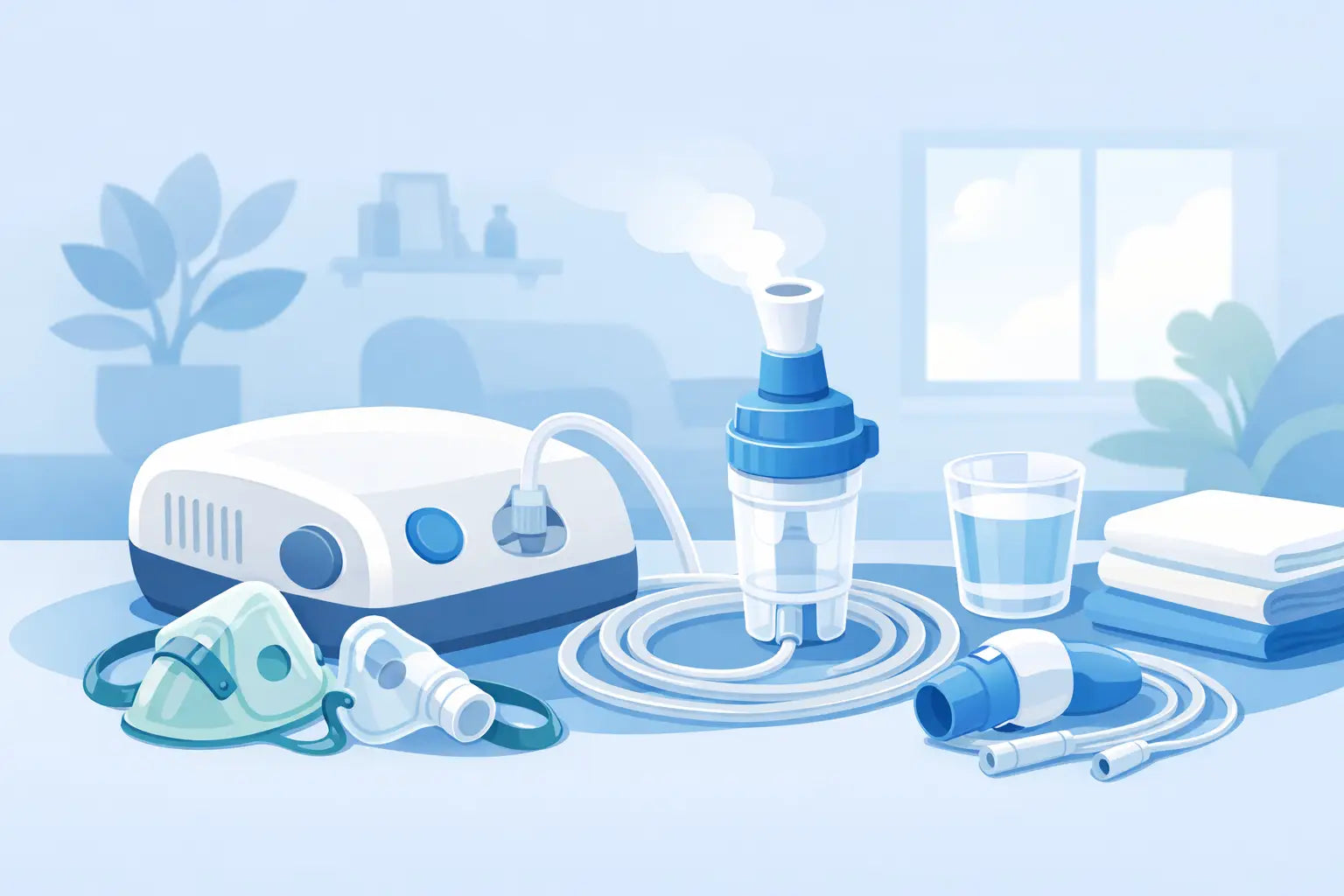
A nebulizer treatment can go off track for a very simple reason - the medicine is ready, but the tubing is worn, the cup is cracked, or the mask no longer fits well. When you rely on nebulizer supplies for home use, the small parts matter just as much as the machine itself. Having the right setup on hand helps keep treatments consistent, comfortable, and easier to manage day after day.
What counts as nebulizer supplies for home use?
Most people think first about the nebulizer compressor, but the supplies around it are what make treatment possible. Depending on the setup, that usually includes a medication cup or nebulizer kit, tubing, a mouthpiece or mask, and replacement filters for the machine. Some users also need extra connectors, storage cases, or backup parts to avoid interruptions.
For home users, the main goal is simple: keep treatments running as prescribed without last-minute scrambles. For clinics and caregivers, it is also about staying organized and making sure the right accessories are available for each patient. Whether you are buying for yourself, a parent, a child, or a practice, it helps to think in terms of the full treatment system instead of one replacement part at a time.
Start with compatibility before anything else
Not every accessory fits every nebulizer. That is where many purchasing mistakes happen. A tubing set may look standard, but connector style, length, or kit design can vary. Masks and mouthpieces also differ by age group and intended use.
Before ordering, check the nebulizer model, the manufacturer recommendations, and the type of treatment being delivered. A basic jet nebulizer setup may need different components than a portable or specialty unit. If the user has been prescribed a certain style of nebulizer kit, it is best to stay close to that original configuration unless a clinician advises otherwise.
This is especially important for caregivers purchasing on someone else’s behalf. The safest move is to confirm the machine name and model number first, then match the accessories to that system. If you are buying for a medical office or patient population, consistency matters even more because mixing incompatible supplies can create confusion and waste.
The core supplies most home users need
Nebulizer kits and medication cups
The nebulizer kit is where the medication is placed and converted into mist. Over time, cups can become discolored, damaged, or less effective due to repeated use and cleaning. If a treatment seems slower than usual or mist output looks inconsistent, the kit may be due for replacement.
Some users keep extra kits on hand so they are not cleaning and reusing the same one under pressure. That can make daily care much easier, especially in homes where treatments happen more than once a day.
Tubing
Tubing connects the compressor to the nebulizer cup. It may seem like a minor part, but kinks, loosened ends, or wear can interfere with airflow. Tubing is generally not something you want to patch or keep using once it shows signs of damage.
A backup set is a smart purchase for households that depend on regular respiratory treatments. It is one of those low-cost items that can prevent a much bigger problem later.
Masks and mouthpieces
The right delivery method affects comfort and treatment success. Mouthpieces are often preferred when the user can hold and seal them correctly. Masks may be more practical for children, older adults, or anyone who has trouble using a mouthpiece for the full treatment.
Fit matters. A poorly fitting mask can lead to wasted medication and a frustrating experience. For pediatric use, choosing the correct size is not a small detail. For adults, comfort and seal quality should both be considered.
Filters
Many compressor nebulizers use filters to help protect the unit. These are easy to overlook because they are small and often out of sight. A dirty or worn filter can affect machine performance and shorten equipment life.
Replacement timing depends on the machine and how often it is used. If the manufacturer provides a schedule, follow it. If the filter looks discolored or clogged, it should not be ignored just because the machine still turns on.
How often should supplies be replaced?
This depends on the product, frequency of use, cleaning habits, and manufacturer guidance. A home user doing occasional treatments may replace parts less often than someone managing chronic respiratory needs every day. The same goes for a clinic where turnover and patient volume are higher.
What matters most is watching for performance changes and visible wear. Cracks, stiffness, poor fit, reduced mist output, and discoloration are all signs that a part may need to go. Waiting too long can affect treatment quality, and that is not a risk worth taking with respiratory care.
If you are unsure, it helps to build a simple replacement routine. Keep track of when kits, masks, tubing, and filters were opened. That approach is practical for families and even more useful for provider offices managing stock across multiple patients or rooms.
Cleaning matters, but it does not solve every problem
Good cleaning habits can extend the usable life of nebulizer accessories, but cleaning is not the same as indefinite reuse. Some parts are designed for regular replacement no matter how carefully they are maintained.
After each treatment, the user should follow the device instructions for rinsing, drying, and storing components. Moisture left behind can create problems over time. Even with proper care, though, plastic components do wear down. If a part looks clean but no longer performs well, replacement is the better choice.
This is one reason many families and caregivers prefer to keep multiple supplies available. It reduces the pressure to reuse something that should really be retired.
Buying for one patient versus stocking for several
Home buyers usually focus on convenience and continuity. They want the correct supplies delivered directly to the door, easy reordering, and clear product descriptions. In that setting, it makes sense to buy enough to avoid gaps in care without overloading a cabinet with items that may not fit the next machine.
Healthcare professionals and office purchasers often need a broader approach. They may be ordering different mask sizes, multiple tubing sets, filters for several compressor models, and replacement kits for recurring patient support. In that case, category depth and reliable fulfillment become just as important as price.
That is where working with a medical supply partner rather than a general marketplace can make the process easier. The selection tends to be more focused, and the purchasing path is built around actual care needs.
Common buying mistakes to avoid
The first mistake is assuming all nebulizer accessories are universal. Some are widely compatible, but not all are. The second is replacing only the most obvious part while ignoring worn tubing or old filters that still affect performance.
Another common issue is buying too late. Respiratory supplies are not something most households want to shop for urgently after a part fails. Planning ahead is easier on everyone involved, especially for caregivers juggling medications, appointments, and daily routines.
There is also a trade-off between buying the cheapest option and buying the right one. Lower price can be appealing, but if the fit, compatibility, or quality is off, you may end up replacing it again sooner. For products tied to prescribed therapy, reliability should carry real weight.
How to shop more confidently
When comparing nebulizer supplies for home use, keep the process simple. Confirm the machine model, identify which parts need replacement, and think about how often treatments happen in the home. Then decide whether you need a single replacement or a small backup supply.
It also helps to shop by user need. A child, an older adult, and a clinic patient room may all require different accessory choices even if the core treatment is similar. Looking at the supply setup through the lens of daily use often leads to better decisions than shopping by price alone.
For buyers who want a straightforward source for respiratory products and related home medical needs, US MedResources supports both individual households and healthcare providers with practical ordering options and dependable delivery.
A good home respiratory setup should not feel complicated. When the right nebulizer supplies are ready before they are urgently needed, treatments are easier to manage and care feels a little more under control.