Call Us -
Cart
0
Waking up tired after a full night in bed can turn a simple treatment decision into an urgent one. When comparing CPAP vs oral appliance therapy, the best choice is not always the smallest device or the most familiar option. It is the treatment that controls your sleep apnea effectively and that you can use consistently.
Both treatments can play an important role in managing obstructive sleep apnea, a condition in which the airway narrows or closes repeatedly during sleep. The right path depends on your diagnosis, apnea severity, anatomy, comfort needs, medical history, and ability to follow treatment over time. A sleep clinician and, when appropriate, a qualified dental professional can help guide that decision.
CPAP vs Oral Appliance: The Core Difference
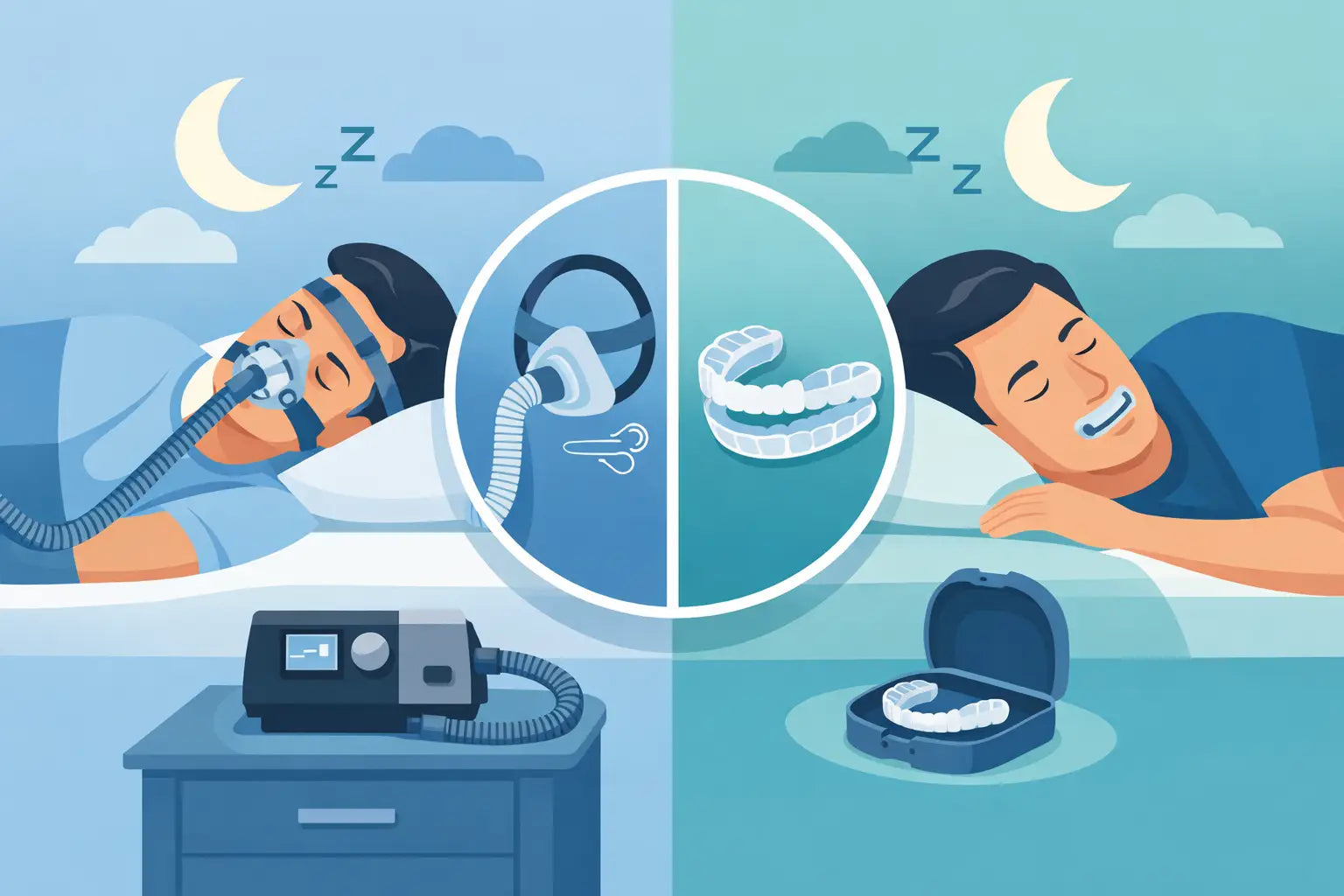
Continuous positive airway pressure, usually called CPAP, uses a bedside machine, tubing, and a mask to deliver a gentle stream of pressurized air. That air pressure helps keep the upper airway open while you sleep. CPAP is commonly prescribed for moderate to severe obstructive sleep apnea and is widely considered the most effective nonsurgical treatment when it is used as directed.
An oral appliance is a custom dental device worn in the mouth during sleep. The most common type, a mandibular advancement device, moves the lower jaw slightly forward. This can help create more room in the airway and reduce the tendency of soft tissues to collapse. Oral appliance therapy is often considered for people with mild to moderate obstructive sleep apnea or for people who cannot tolerate CPAP.
These options address the same goal in different ways. CPAP supports the airway with air pressure. An oral appliance changes the position of the jaw and tongue to support airflow.
When CPAP Is Often the Stronger Choice
CPAP is usually the first treatment discussed for moderate to severe obstructive sleep apnea, especially when a sleep study shows frequent breathing interruptions or significant drops in oxygen levels. It can reduce apnea events very effectively across a wide range of patients, including those with more complex health needs.
It may also be the preferred option when symptoms are severe, such as pronounced daytime sleepiness, morning headaches, loud habitual snoring, or witnessed pauses in breathing. For patients with certain heart, lung, or neurologic concerns, the sleep care team may be especially likely to recommend CPAP because untreated sleep apnea can add strain to overall health.
The main challenge is not whether CPAP works. It is whether the patient can get comfortable using it every night. Some people struggle with mask leaks, dry mouth, nasal congestion, a feeling of pressure, or simply adjusting to sleeping with equipment. These concerns are common, and they are often manageable.
A different mask style, heated humidification, better tubing placement, gradual pressure settings, or treatment for nasal congestion may make a meaningful difference. Patients should not assume that one difficult week with CPAP means it will never work for them. A proper mask fit and follow-up support are part of treatment, not optional extras.
When an Oral Appliance May Make Sense
An oral appliance can be a practical alternative for adults with mild to moderate obstructive sleep apnea who prefer a less equipment-heavy option. It may also be suitable for patients who have tried CPAP with proper support but still cannot tolerate the mask or airflow.
Many people find an oral appliance easier to pack for travel, quieter to use, and less disruptive to a bed partner. There is no bedside machine, no power outlet requirement, and no mask. For someone who frequently travels or has limited space near the bed, those conveniences can make consistent treatment easier.
However, convenience should not be confused with a one-size-fits-all solution. An oral appliance needs to be custom fitted and adjusted by a qualified dentist with training in dental sleep medicine. Store-bought mouthguards and boil-and-bite devices are not substitutes for prescribed oral appliance therapy. A poorly fitted device may be uncomfortable, shift teeth, strain the jaw, or fail to manage sleep apnea adequately.
Oral appliances may not be appropriate for people with significant untreated dental problems, insufficient healthy teeth to support the device, certain jaw joint disorders, or advanced periodontal disease. They can also cause temporary jaw soreness, tooth discomfort, excess saliva, dry mouth, or bite changes. Regular dental follow-up matters because small adjustments can affect both comfort and treatment success.
Effectiveness Depends on Both Results and Use
A treatment only helps when it is used. This is why the CPAP versus oral appliance decision requires more than comparing devices on paper.
CPAP generally reduces breathing events more completely, particularly in moderate to severe cases. But a highly effective CPAP machine does not provide its full benefit if it stays on the nightstand. In contrast, an oral appliance may not reduce apnea events as much for some patients, but it can still be a valuable treatment if it is worn consistently and confirmed to be effective.
Your provider may recommend a follow-up sleep study or home sleep apnea test after an oral appliance has been adjusted. This step verifies whether the device is adequately controlling breathing events and oxygen changes. It is also useful after major weight changes, new symptoms, or changes in dental health.
The same principle applies to CPAP. Modern machines can often provide usage and treatment data that helps the care team identify leaks, pressure concerns, and nights when therapy is less effective. Ongoing follow-up allows treatment to be refined instead of abandoned.
Factors to Discuss With Your Care Team
The most useful question is not simply, “Which treatment is better?” Ask which option is most likely to control your sleep apnea and fit your real life. Your care team will consider your sleep-study results, symptoms, health conditions, weight, nasal breathing, jaw structure, and dental history.
Your routine also matters. A person who travels for work may value the portability of an oral appliance. Someone with severe sleep apnea and major daytime fatigue may need the stronger control CPAP can provide. A patient with chronic nasal blockage may need help improving nasal comfort before deciding that CPAP is intolerable.
Cost and coverage can also affect the decision. Insurance rules vary by plan, provider network, diagnosis, and documentation requirements. CPAP supplies such as masks, cushions, filters, tubing, and humidifier chambers need regular replacement to maintain comfort and hygiene. Oral appliances require professional fitting, adjustments, and periodic dental evaluation. Before starting, ask what equipment, follow-up visits, and replacement needs may be covered.
Making CPAP More Comfortable at Home
If CPAP has been recommended, give yourself time to adjust and contact your provider when something feels wrong. Many comfort problems have a practical solution. A mask that leaks may be the wrong size or style. Nasal dryness may improve with humidification. Claustrophobia may ease when you practice wearing the mask briefly while awake before using it overnight.
Keep the equipment clean according to the manufacturer’s instructions, replace worn supplies on schedule, and check that filters are in good condition. A clean, properly maintained system supports reliable airflow and a more comfortable experience. If you use a full-face mask because of mouth breathing, ask whether nasal congestion, chin support, or a different mask design could improve your fit.
Caregivers can help by encouraging follow-up rather than treating discomfort as failure. Sleep apnea treatment is often a process of adjustment, especially during the first several weeks.
A Safe Way to Move Forward
Do not choose a CPAP machine or oral appliance based only on snoring, a recommendation from a friend, or an over-the-counter device. Snoring can occur without sleep apnea, and sleep apnea can be serious even when snoring seems ordinary. A sleep evaluation provides the information needed to select treatment responsibly.
If you already have a diagnosis, bring specific concerns to your appointment: how often you use your current therapy, what wakes you up, whether you have jaw pain or dental changes, and whether you still feel sleepy during the day. Clear details help your provider make a better recommendation.
The goal is not to win a CPAP vs oral appliance debate. It is to find a treatment you can use night after night with confidence. With the right clinical guidance, proper equipment support, and regular follow-up, better sleep can become a practical part of your everyday care.