Call Us -
Cart
0
A small wound can become much harder to manage when the dressing does not match the amount of drainage, the location of the injury, or the condition of the surrounding skin. When comparing gauze pads vs foam dressings, the best choice is rarely about which product is universally better. It is about selecting a dressing that protects the wound, manages moisture appropriately, and can be changed without causing unnecessary disruption.
For caregivers, home users, and clinical teams, understanding the practical differences can make dressing changes more comfortable and supply ordering more efficient.
Gauze Pads vs Foam Dressings: The Main Difference
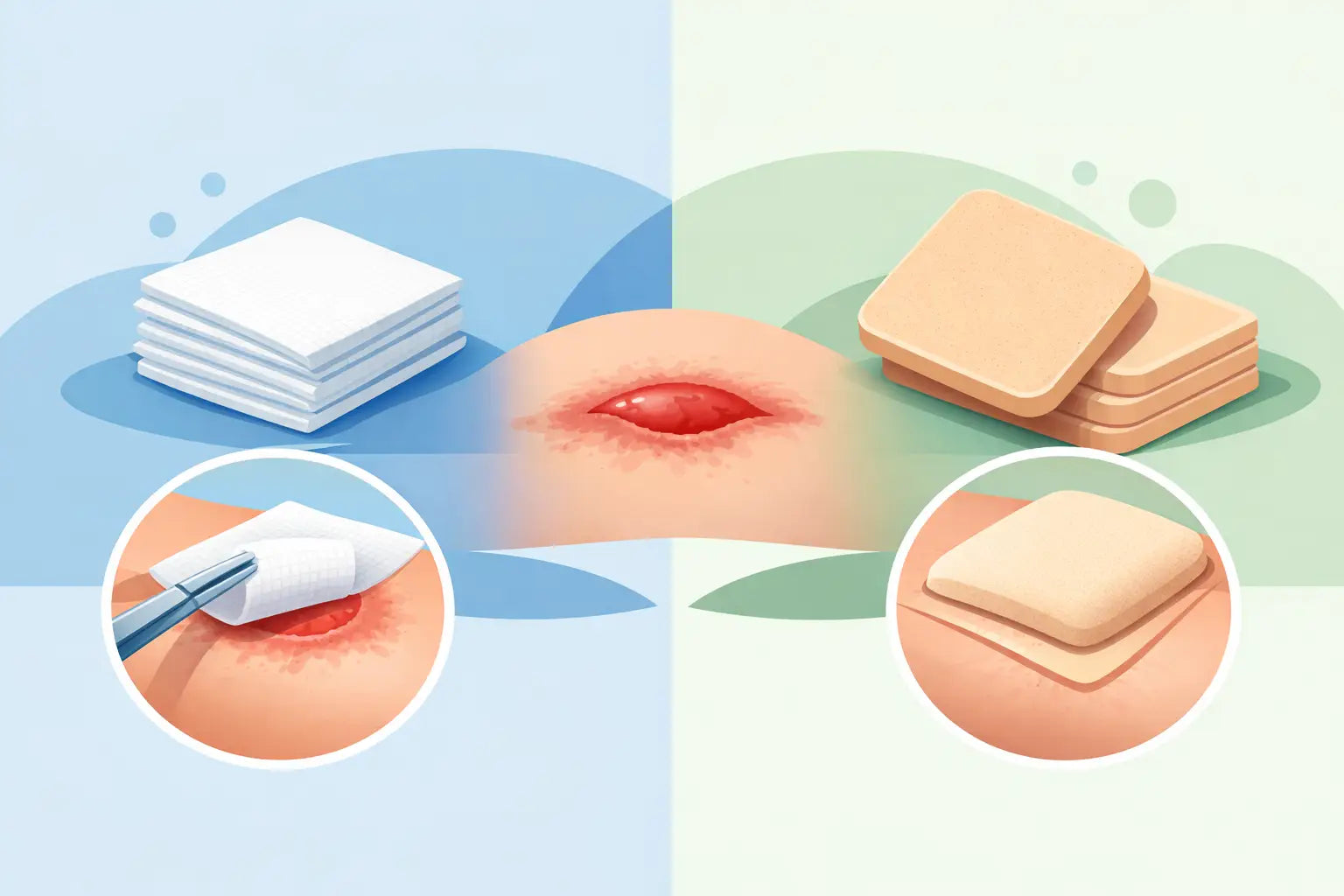
Gauze pads are versatile woven or nonwoven dressings commonly used to cover, clean, pack, or protect wounds. They are available in sterile and nonsterile options, in multiple sizes, and with different thicknesses. Gauze is often secured with tape, rolled gauze, or a bandage wrap.
Foam dressings are soft, absorbent pads designed to manage wound drainage while providing cushioning. Many have an adhesive border, although non-adhesive foam options are also available. Foam dressings are generally thicker than gauze and are intended to hold fluid away from the wound surface.
The practical distinction is simple: gauze offers flexibility and low-cost, frequent-change coverage, while foam offers greater absorption and padding for wounds that need it. The right choice depends on the wound and the care plan.
When Gauze Pads May Be the Better Choice
Gauze pads work well for many basic first-aid and wound-care tasks. They can be used over minor cuts, abrasions, surgical sites with minimal drainage, and wounds that require frequent inspection or cleaning. Sterile gauze is also a common choice for applying prescribed wound-care solutions or creating a protective cover under a secondary dressing.
One advantage of gauze is its adaptability. A caregiver can layer it for additional coverage, trim it to fit a small area when appropriate, or use it with a separate absorbent pad. It is also widely available in standard sizes, making it practical for home first-aid kits, physician offices, and routine supply closets.
Gauze may be especially useful when a wound has little drainage and needs to be checked often. Since it is usually inexpensive, frequent dressing changes may be more manageable from a supply-cost standpoint.
There are trade-offs. Plain gauze can dry against a wound, particularly if drainage is limited, and may stick when removed. Removing an adhered dressing can be uncomfortable and may disturb fragile healing tissue. Gauze can also become saturated quickly with moderate or heavy drainage, requiring more frequent changes to prevent moisture from sitting against the skin.
For a wound that needs packing, clinicians may specify particular gauze products or packing materials. Do not pack a wound at home unless a healthcare professional has instructed you to do so and provided clear guidance.
When Foam Dressings May Be the Better Choice
Foam dressings are often selected for wounds with light to moderate drainage, and some higher-absorbency options may be appropriate for heavier drainage when recommended by a clinician. Their absorbent structure pulls fluid into the dressing, helping reduce the risk of excess moisture around the wound.
That moisture management matters. Skin that stays wet for too long can become soft, pale, fragile, and more likely to break down. This is particularly relevant for pressure injuries, leg ulcers, diabetic foot wounds, and surgical wounds with ongoing drainage.
Foam also provides cushioning. That can be helpful over bony areas such as heels, elbows, hips, or the sacrum, as well as locations exposed to friction from footwear, braces, or movement. A foam dressing does not replace proper pressure relief, repositioning, or offloading, but it can add a layer of protection as part of a broader care plan.
Many foam dressings can stay in place longer than standard gauze if they remain clean, secure, and within the change schedule provided by a clinician or the product instructions. Fewer dressing changes may mean less disruption to the wound and greater comfort for the patient.
Foam is not ideal for every situation. It is usually more expensive than gauze, can be bulky under clothing or footwear, and may not conform well to very small or irregular areas without the right size or shape. Adhesive-bordered foam can also irritate delicate skin or cause skin injury during removal. For patients with fragile skin, an adhesive-free foam secured with a gentle wrap or retention method may be preferable.
Compare Absorbency, Comfort, and Change Frequency
Drainage is one of the most useful factors when choosing between these dressings. A dry or minimally draining wound may not need the added thickness and absorption of foam. In that case, sterile gauze may provide adequate protection and make routine checks easy.
As drainage increases, foam becomes more attractive because it can absorb fluid without needing as many layers. If gauze repeatedly soaks through, requires multiple changes each day, or leaves surrounding skin damp, a more absorbent dressing may be worth discussing with the care team.
Comfort is another consideration. Gauze is thin and flexible, but it may shift or catch on the wound if not used with an appropriate non-adherent contact layer. Foam is softer and more protective, making it a common choice where rubbing, pressure, or tenderness is a concern.
Change frequency should follow the wound-care plan, not just convenience. A dressing needs to be changed if it becomes saturated, loose, wet from outside moisture, visibly soiled, or contaminated. A dressing that stays in place longer is useful only if it remains safe and effective.
Choosing for Common Wound Situations
For minor cuts and scrapes, a sterile gauze pad may be enough when paired with proper cleaning and securement. If the wound is small and dry, a bulky foam dressing may offer more coverage than necessary.
For a draining surgical incision, the choice depends on the amount of drainage, the incision location, and the surgeon's instructions. Gauze is often used early when frequent monitoring is needed. Foam may be used later or when cushioning and drainage control are priorities.
For pressure-prone areas, foam dressings can offer useful padding, especially over heels or the sacrum. However, pressure injuries require more than a dressing. Regular repositioning, pressure redistribution, nutrition, mobility support, and clinical evaluation are central to care.
For diabetic foot wounds, dressing selection should be guided by a podiatrist or wound-care professional whenever possible. Changes in drainage, odor, redness, swelling, or pain can require prompt assessment. Avoid relying on a dressing alone to manage a foot wound when diabetes or poor circulation is involved.
Practical Ordering Considerations
For home use, it is helpful to keep a small selection of sterile gauze pads in common sizes because they are useful for first aid, wound cleansing, and secondary coverage. If a household member has an ongoing wound with drainage or pressure concerns, maintaining the specific foam dressing and securement supplies recommended by the care team can prevent gaps between deliveries.
Clinical buyers may want to standardize a few core gauze and foam options while keeping specialty sizes available for high-friction areas, surgical sites, and fragile skin. Consider the total cost of care, not only the unit price. A lower-cost gauze pad that must be changed several times a day may not always be the most practical option for a draining wound.
When to Call a Healthcare Professional
Seek medical guidance for increasing redness, warmth, swelling, worsening pain, pus-like drainage, a foul odor, fever, red streaks, or bleeding that does not stop with direct pressure. A wound that is getting larger, darker, deeper, or more painful also needs prompt attention.
People with diabetes, circulation problems, reduced sensation, immune suppression, or a history of pressure injuries should contact a healthcare professional early when a new wound develops. The dressing is one part of treatment, not a substitute for diagnosis or follow-up care.
The most useful dressing is the one that fits the wound's drainage level, protects the surrounding skin, and supports the plan set by the patient's care team. Keep dependable gauze on hand for flexible everyday coverage, and choose foam when absorption and cushioning are needed. If the wound changes, let the dressing choice change with it.