Call Us -
Cart
0
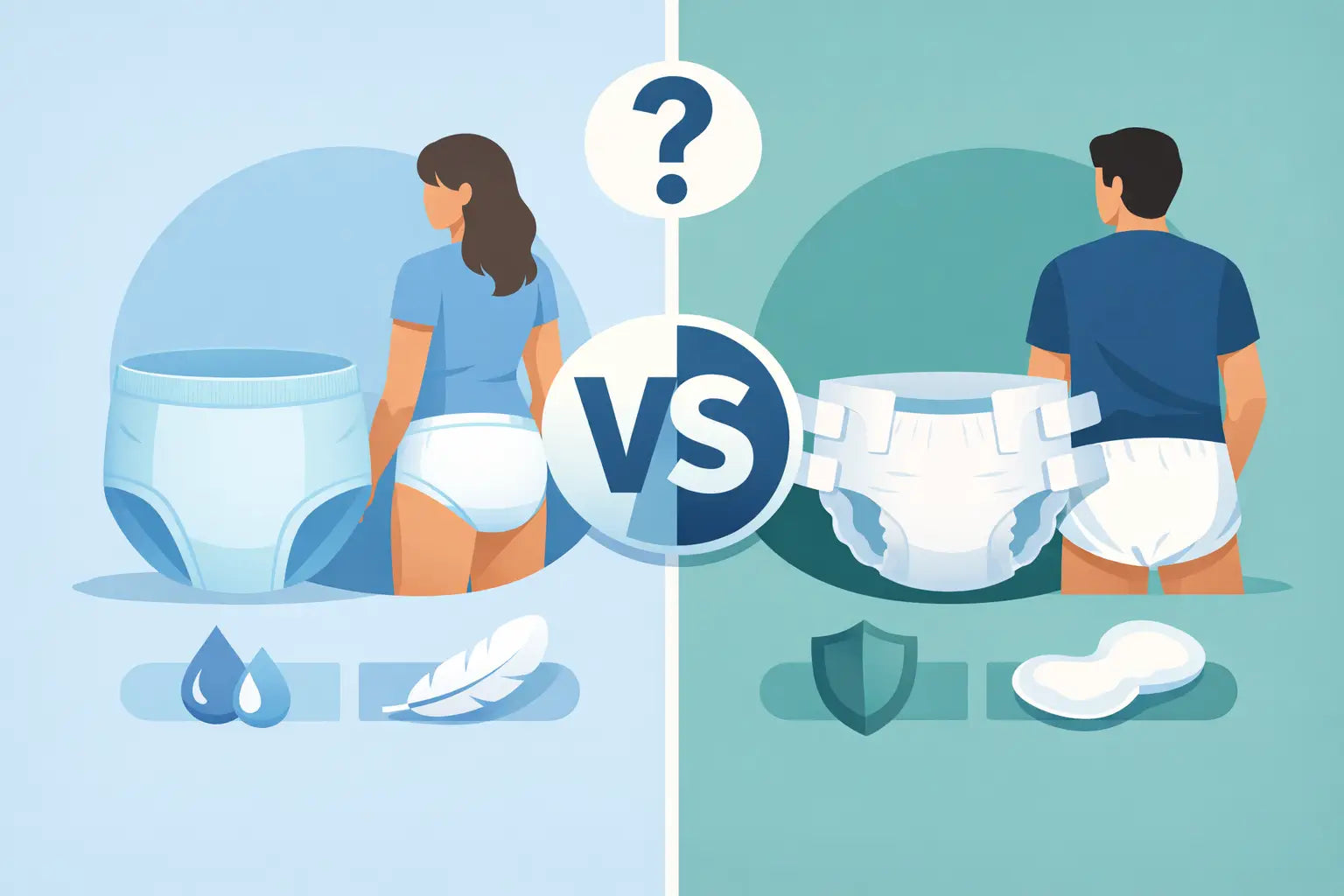
When you are comparing pull ups vs adult diapers, the right choice usually comes down to one practical question - what will make daily care easier while still giving reliable protection? For some adults, that means a product they can pull on like regular underwear. For others, it means a brief with tabs that is easier to change in bed, in a chair, or with caregiver help.
This is not a one-size-fits-all decision. Mobility, absorbency needs, skin health, dignity, and caregiver workload all matter. The best product is the one that fits the person, the care setting, and the level of incontinence without creating extra stress during the day.
Pull ups vs adult diapers: the basic difference
Pull-ups are worn like regular underwear. They have an elastic waist and are designed for adults who can usually stand, step in, and pull the product up and down on their own. Many people prefer them because they feel more discreet under clothing and can support more independent toileting.
Adult diapers, often called adult briefs, use refastenable tabs on the sides. They are opened and secured around the waist rather than pulled on. This design is often the better fit for adults with limited mobility, people who need caregiver assistance, or anyone who cannot safely change standing up.
That core difference affects almost everything else, including convenience, comfort, and where the product works best.
When pull-ups make more sense
Pull-ups are often a strong choice for active adults and seniors who still want a product that feels close to normal underwear. If someone can walk to the bathroom, manage their clothing, and handle changes without assistance, a pull-up can support that independence.
They also tend to work well for light to moderate incontinence. Someone with occasional leaks, urge incontinence, or daytime accidents may prefer the lower-profile fit and the psychological comfort of wearing something less medical-looking. For many people, that matters. Feeling more normal can make everyday routines easier.
There is a trade-off, though. Pull-ups are not always the easiest option if the product needs to be changed quickly in public, while traveling, or during periods of fatigue. If shoes and pants have to come off for a full change, the process can become more complicated than expected.
Best situations for pull-ups
Pull-ups are usually the better match for daytime use, social outings, work, and moderate activity. They can also be useful for individuals in rehab or recovery who are rebuilding strength and want to keep some independence in personal care.
If discretion is the priority, they often have the advantage. Under many types of clothing, they can look and feel more like standard undergarments.
When adult diapers are the better option
Adult briefs are built for a different level of need. If a person is bedbound, uses a wheelchair, has limited balance, or relies on caregiver help, tab-style briefs are usually more practical. They can be changed while lying down or seated, and the tabs allow for faster adjustments without fully undressing.
This matters in both home care and clinical settings. A product that is easier to put on and remove can reduce strain for the caregiver and make the experience more comfortable for the patient. It can also improve compliance with regular changes, which supports skin health.
Adult diapers are often the better choice for heavy incontinence or overnight use as well. Many tab-style briefs are designed with higher absorbency, stronger leak guards, and a more secure fit around the legs and waist. That extra protection can be worth the slightly bulkier feel.
Best situations for adult briefs
Adult diapers tend to work best for overnight protection, bowel incontinence, post-surgical recovery, reduced mobility, and caregiving situations where fast changes matter. They are also a practical option when frequent repositioning or monitoring is part of the care routine.
For facilities and family caregivers alike, the tab closure can make a noticeable difference in daily efficiency.
Fit matters more than most people expect
A product can have the right absorbency on paper and still fail if the fit is wrong. Leaks often happen because the leg openings gap, the waistband shifts, or the product is simply too large. Going up a size for “more room” often backfires.
Pull-ups need a close but comfortable fit to stay in place during movement. If they slide down or bunch up, they lose their advantage. Adult briefs need a secure tab placement and a snug seal around the legs without being overly tight.
This is why trying more than one style can be worthwhile. Body shape, mobility level, and personal preference all affect how well a product performs. What works for one adult may not work for another, even with the same level of incontinence.
Absorbency is not just about volume
People often shop by absorbency level alone, but the timing and type of leakage matter too. A person with occasional small leaks during the day may do well with a pull-up that emphasizes discretion. Someone with sudden full voids or overnight accidents may need the structure and capacity of a brief.
There is also the question of bowel incontinence. In many cases, adult briefs are easier to manage and more secure for this need. They can provide better containment and allow for more efficient changes, especially when caregiver support is involved.
Overbuying absorbency is not always the answer either. A product that is much thicker than needed may feel hot, bulky, or restrictive, which can lead some users to avoid wearing it consistently. The better approach is to match the product to the actual level of need.
Skin health and comfort should stay front and center
Moisture management is a major part of continence care. If a product traps wetness against the skin or stays on too long after soiling, irritation can follow quickly. That risk increases for older adults, people with fragile skin, and anyone spending long periods seated or in bed.
Both pull-ups and adult diapers can support skin health when they are changed appropriately and fit well. Breathable materials, soft inner linings, and good leak protection all help. But in practice, briefs can have an advantage in high-need situations because they are easier to change without unnecessary pulling or friction.
If redness, pressure marks, or recurring skin breakdown are showing up, the issue may not be the category alone. It may be the fit, the absorbency level, the change schedule, or the overall skin care routine.
Independence vs caregiver convenience
This is where the choice often becomes clear. Pull-ups support independence better. Adult diapers support assisted care better.
That does not mean one option is always more dignified than the other. Dignity comes from using the product that allows the person to stay comfortable, dry, and confident with the least disruption possible. For one adult, that may be a pull-up worn discreetly under everyday clothes. For another, it may be a high-absorbency brief that prevents nighttime leaks and makes caregiver changes less stressful.
In home care settings, it is common to use both. Some adults wear pull-ups during the day for mobility and switch to tab-style briefs at night for added protection. That kind of mix-and-match approach is often the most practical.
Cost, routine, and real-world use
Price matters, especially for long-term use, but it should be measured against performance. A less expensive product that leaks, shifts, or requires more frequent changes can end up costing more in laundry, bedding, skin products, and time.
Think about the full routine. Is the user active outside the home? Are changes done independently or by a caregiver? Is overnight protection the main concern? Does the person need a product that can be adjusted after application? Those details usually point to the right category faster than price alone.
For families and providers ordering on a schedule, consistency matters too. Reliable sizing, dependable absorbency, and direct delivery can make ongoing care easier to manage. That is especially true when supplies are part of a broader home health routine.
How to decide between pull ups and adult briefs
If the person is mobile, wants discretion, and manages toileting with little help, start with pull-ups. If the person needs assistance, has limited mobility, or requires heavier protection, start with adult briefs.
Then test the choice against real use. Look at leakage, comfort, skin condition, ease of changing, and confidence during the day or overnight. If one product creates friction in the routine, it is probably the wrong fit, even if it looked right on paper.
At US MedResources, the goal is simple: make it easier to find practical incontinence supplies that support care at home or in professional settings. The right product should work for the person using it and for the people helping manage care.
A better daily routine often starts with a simple change - choosing the product that fits the reality of care, not just the label on the package.